



Visit two fish farms side by side, and you might be struck by how similar they look. Same species. Same water quality. Same stocking density. Yet one farm consistently produces larger, healthier fish while the other struggles with slow growth and high mortality. Walk into the feed rooms, and you’ll find the answer. One is using sinking pellets that break apart within minutes. The other is using high-quality floating feed that stays intact for hours.
The difference isn’t subtle. Floating feed allows farmers to see exactly how much their fish are eating. They can adjust rations in real time, eliminating waste and ensuring every fish gets enough nutrition. The stability of floating pellets means nutrients aren’t leached into the water, reducing pollution and disease pressure. And the digestibility improvements from proper extrusion mean better feed conversion—more fish per pound of feed.
A Feeding System That Actually Works
What makes floating feed so effective? It comes down to the processing method. Floating feed is produced through a high-temperature, high-pressure cooking process called extrusion. The raw ingredients—typically a blend of fishmeal, plant proteins, grains, and oils—are mixed and then subjected to intense heat and pressure inside a machine. When the material is suddenly released through a die at the end of the machine, the rapid pressure drop causes the moisture inside to vaporize instantly. This creates the porous structure that makes the pellets float.
But extrusion does more than create buoyancy. The high heat and shear during processing break down anti-nutritional factors that are naturally present in plant proteins. Starches are gelatinized, making them far more digestible. Proteins are partially denatured, improving amino acid availability. The result is a feed that fish can utilize more efficiently, producing more growth from the same amount of raw materials.
The Machine That Makes It Possible
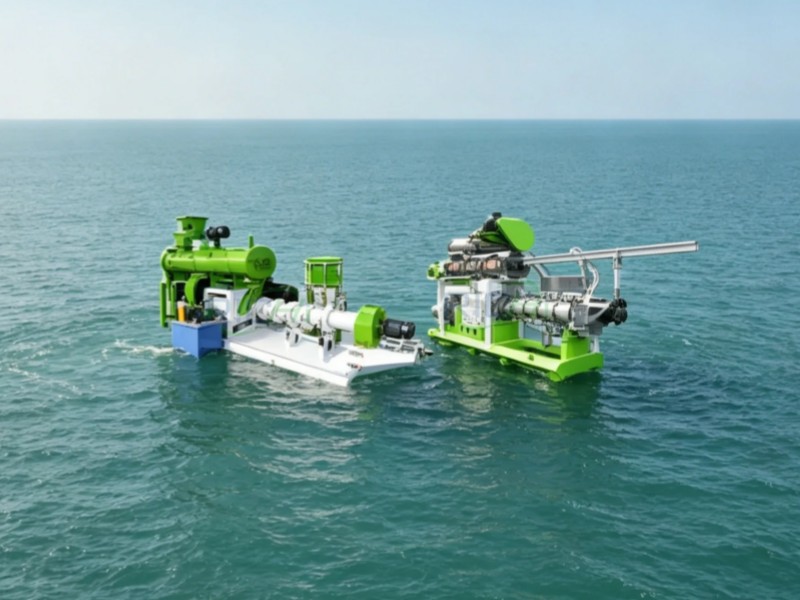
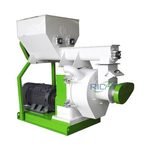
At the heart of floating feed production is a specialized piece of equipment called a floating fish feed machine. These machines are engineered to handle the demanding conditions of extrusion cooking. They operate at high temperatures—often above 100°C—and maintain consistent pressure to achieve the precise expansion needed for buoyancy. The barrel is typically jacketed for temperature control, and the screw configuration is designed to create the shear and mixing necessary for proper cooking.
A good floating fish feed machine produces pellets that float for at least 30 minutes—ideally longer. This float time is critical because fish need time to find and consume the feed. If the pellets sink too quickly, they’re lost to the bottom of the pond, where they can rot and degrade water quality.
Different fish species have different requirements, and a quality machine can be adjusted to produce pellets of varying sizes and densities. Some species, like tilapia, are surface feeders that prefer floating pellets. Others, like shrimp, need slow-sinking pellets. The flexibility to produce different types from the same equipment adds considerable value.
Twin Screw Technology: The Preferred Choice
Not all extruders are built the same. The two main configurations are single screw and twin screw. The single screw extruder is simpler and less expensive, but it has limitations when it comes to processing variable ingredients and achieving consistent output.
A twin screw extruder machine for sale offers significant advantages for floating feed production. The intermeshing screws create positive displacement, meaning the material is conveyed forward regardless of its moisture content or composition. This allows the extruder to handle ingredients with varying oil and moisture levels without the slippage and inconsistent output that can plague single screw designs.
The twin screw configuration also provides better mixing and shear, which leads to more uniform cooking and expansion. The self-wiping action of the intermeshing screws reduces material buildup inside the barrel, simplifying cleaning and minimizing downtime between production runs. For feed manufacturers producing multiple formulations for different species, this flexibility is extremely valuable.
Twin screw extruders are generally more expensive to purchase, but they deliver better performance and lower operating costs over time. The reduced waste, higher consistency, and ability to process a wider range of ingredients typically justify the additional investment.
Ingredients and Formulation Considerations
Floating fish feed requires careful formulation. The ingredients must be ground to the correct particle size. Too coarse, and the feed won’t expand properly; too fine, and the texture may be too dense. The moisture content of the mash entering the extruder must be precisely controlled, typically between 22% and 28%. Too much moisture and the pellets won’t expand enough; too little and the material won’t bind properly.
The protein sources used in floating feed are often a blend of fishmeal and plant proteins. Fishmeal provides the essential amino acids that fish need for growth, but it’s expensive and becoming increasingly scarce. Plant proteins—soybean meal, canola meal, and others—are more affordable but contain anti-nutritional factors that affect palatability and digestibility. Extrusion reduces these factors, making plant proteins more viable as partial replacements for fishmeal.
The starch content also matters. Starches from grains like wheat, corn, and tapioca act as binders that help hold the pellet together during expansion. The right starch level is a balance: enough to bind the pellet but not so much that the pellet is too dense to float.
From Ingredients to Finished Feed
The production of floating feed is a multi-stage process, and each stage requires attention to detail.
Grinding is the first step. The ingredients, especially grains and oilseed meals, need to be reduced to a uniform particle size. This is typically done with a hammer mill. The consistency of the grind affects how well the ingredients mix and how uniformly they expand during extrusion.
Mixing follows. All the ingredients are thoroughly blended, often with steam and moisture added to prepare them for extrusion. Proper mixing ensures that every pellet contains the correct balance of nutrients.
The heart of the process is extrusion. The conditioned mash enters the pellet press—the part of the extruder where the material is forced through the die—and emerges as expanded, cooked pellets. The die configuration determines the diameter of the pellets, while the cutter determines the length.
Drying is next. The hot, moist pellets emerging from the extruder need to be dried to a stable moisture content, typically around 10%. This drying prevents mold growth during storage.
Coating is optional but often valuable. Oils and other supplements can be sprayed onto the pellets after drying. This allows the inclusion of heat-sensitive additives that would be destroyed during extrusion.
The Farmer Who Built His Own Feed Plant
A tilapia producer in Thailand was facing the same problem that many fish farmers experience: his commercial feed costs were climbing, and the quality was inconsistent. One batch would float well; the next would sink within minutes. His growth rates varied accordingly.
After extensive research, he decided to build his own feed production line. He started with a small-scale extruder and added a dryer, coater, and packaging system over time. The initial investment was about $60,000 for the complete line.
The first batch of feed he produced floated perfectly. His tilapia loved it, and growth rates actually improved because he could formulate the feed specifically for his local conditions and water temperature. His feed costs dropped by about 25% compared to commercial feed.
Within two years, he had expanded his operation and was producing more feed than his own farm needed. He started selling surplus feed to neighboring farms, creating a new income stream. The equipment had paid for itself, and the business was stronger than ever.
Related post:https://pelletizerextruder.com/floating-fish-feed-extruder-machine/
The Financial Argument for In-House Production
For fish farmers producing significant volumes, on-farm feed production offers substantial economic advantages. The savings typically come from three sources: ingredient cost savings, reduced waste, and improved feed conversion.
Buying raw ingredients in bulk is far cheaper than buying finished feed from a commercial supplier. The margin between raw ingredients and finished feed is typically 20% to 40%. That’s the margin you capture when you produce your own feed.
Reduced waste is another factor. Floating feed that’s properly made and properly fed results in minimal waste. Commercial feeds often contain fines and broken pellets that are unusable. In-house production, with quality control, eliminates this issue.
Improved feed conversion delivers even more savings. Floating feed that’s highly digestible means more growth per pound of feed. For a farmer producing 50 tons of fish annually, even a 5% improvement in feed conversion can add thousands to the bottom line.
Environmental Considerations
Floating feed production also brings environmental benefits. The stability of floating feed means less nutrient leaching into water. Nutrients stay in the feed until the fish consume it, rather than dissolving into the pond water and promoting algal blooms.
The use of alternative proteins, enabled by extrusion, reduces dependence on wild-caught fishmeal. This supports global efforts to reduce pressure on marine fisheries. And the ability to use locally sourced ingredients reduces transportation distances and associated emissions.
For fish farms operating under environmental regulations, these benefits can help with compliance and may qualify for programs that support sustainable aquaculture.
Choosing the Right Equipment
Selecting equipment for floating feed production requires careful assessment of several factors.
Production capacity is the most important parameter. Your extruder must keep up with your feed demand. Under-sizing the equipment will create supply bottlenecks; over-sizing will tie up capital unnecessarily.
The ingredient flexibility is another consideration. If you plan to use a wide variety of ingredients, a twin screw extruder offers more versatility. If your formulation is simple and consistent, a single screw extruder may suffice.
After-sales support matters. The manufacturer should provide technical support, training, and a reliable parts supply. The production of floating feed is a continuous process, and downtime is expensive.
Automation options can add value. Modern extruders include computer control that manages temperature, pressure, and feed rate. This automation reduces operator error and improves product consistency.
The Takeaway
The difference between an average fish farm and a high-performing one often comes down to feed. Floating feed produced through quality extrusion delivers better growth, lower waste, and higher profitability.
For farmers who take control of their feed production, the rewards are substantial. Lower costs, better quality, and greater independence are all within reach. The technology is proven, the equipment is accessible, and the market is waiting. The decision is yours to make.