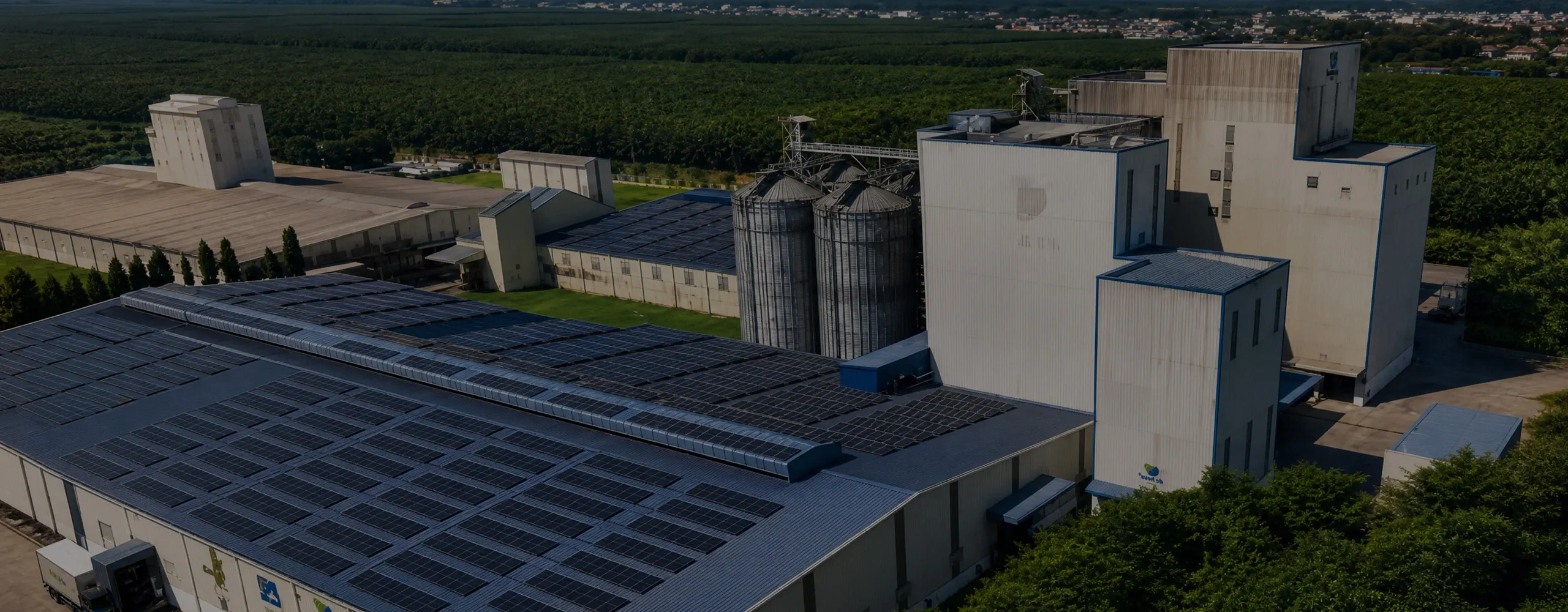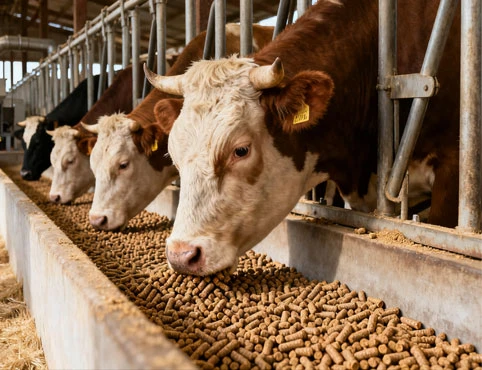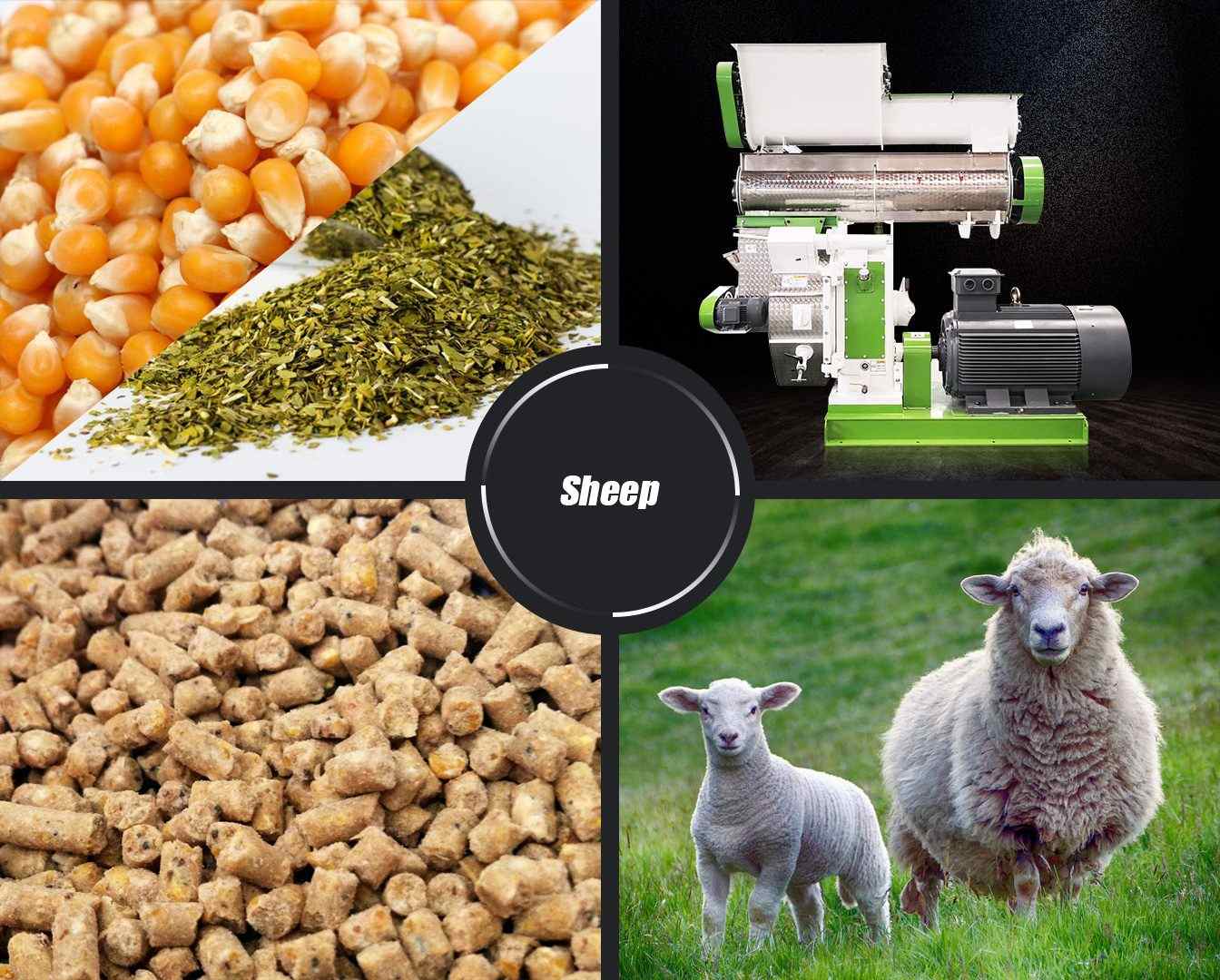





Building a cattle feed plant is a comprehensive project that involves much more than purchasing a pellet mill. A successful feed factory needs suitable land, a well-planned production process, reliable equipment, raw material storage, utility systems, quality control, trained operators, and an appropriate level of automation.
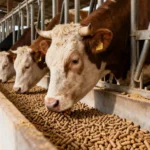
A modern cow feed plant can produce different types of feed for dairy cows, beef cattle, calves, breeding cattle, and growing cattle. Depending on the market and production requirements, the plant may manufacture cattle feed pellets, concentrate feed, complete feed, high-fiber feed, or customized formulated products.
For investors, understanding what is needed before starting construction can help reduce unnecessary investment and avoid equipment mismatches. The following sections explain the major requirements for building a complete cattle feed manufacturing facility.
1. A Clear Production Plan
The first requirement is a clear production plan.
Before choosing equipment or constructing a factory, the investor should determine what type of cattle feed will be produced and who will use it.
Different cattle groups have different nutritional requirements. Dairy cows, beef cattle, calves, and breeding cattle may use different formulas and pellet sizes.
The plant may produce:
- Dairy cattle feed
- Beef cattle feed
- Calf feed
- Cattle concentrate
- Complete cattle feed
- Cattle feed pellets
- High-fiber feed
- Mineral and vitamin premixes
- Customized livestock feed
The production plan should also define whether the factory is intended for internal farm use or commercial feed sales.
A farm-owned facility may use a relatively simple production system. A commercial feed factory usually requires higher automation, larger storage capacity, more formula options, and automatic packaging.
2. Determine the Production Capacity
Production capacity is another fundamental requirement.
The capacity of the plant should match the expected feed demand rather than simply selecting the largest available equipment.
Small cattle farms may require a few hundred kilograms per hour, while commercial feed manufacturers may need several tons per hour.
Typical project capacities can include:
- 1–2 tons/hour
- 3–5 tons/hour
- 5–10 tons/hour
- 10–20 tons/hour
- 20 tons/hour or more
The actual capacity should consider the number of working hours per day, expected annual production, seasonal demand, and future expansion.
For example, a factory designed to produce 40 tons of feed per day may not necessarily need equipment with a nominal capacity of exactly 5 tons/hour. Production time may also be needed for cleaning, formula changes, equipment maintenance, and other operations.
Therefore, capacity should be calculated according to actual operating conditions.
3. Suitable Land and Factory Space
A cattle feed plant needs sufficient space for both production and storage.
The required factory area depends on the production capacity and process configuration.
A complete facility may include:
- Raw material receiving area
- Raw material warehouse
- Grain storage
- Production workshop
- Grinding section
- Batching section
- Mixing section
- Pelletizing section
- Cooling and screening area
- Packing area
- Finished product warehouse
- Control room
- Laboratory
- Maintenance workshop
- Office area
Large plants may also require silos and additional storage buildings.
The factory should have enough space for trucks to enter, unload raw materials, and load finished feed.
Future expansion should also be considered during the initial layout design.
4. Reliable Raw Material Supply
A feed factory cannot operate without a stable supply of raw materials.
Common cattle feed ingredients include:
- Corn
- Barley
- Wheat
- Sorghum
- Wheat bran
- Rice bran
- Soybean meal
- Rapeseed meal
- Cottonseed meal
- Peanut meal
- Alfalfa
- Grass
- Hay
- Straw
- Corn silage
- Molasses
- Minerals
- Vitamins
- Amino acids
- Feed additives
The exact ingredients depend on the feed formula and local market.
Raw materials should be selected based on nutritional value, availability, price, storage characteristics, and processing requirements.
For example, a formula containing a high percentage of hay, alfalfa, or straw may require additional fiber-processing equipment. A formula based mainly on grains and protein meals may require a more conventional grain grinding system.
Stable raw material procurement is therefore just as important as equipment selection.
5. Raw Material Storage
Adequate storage is essential for a commercial cattle feed factory.
Raw materials can be stored in different ways depending on their physical characteristics.
Bulk grains may be stored in silos or bins. Bagged ingredients can be stored in warehouses. Liquid ingredients such as molasses may require dedicated tanks.
The storage system should protect ingredients from:
- Moisture
- Rain
- Pests
- Contamination
- Excessive heat
- Cross-contamination
Storage capacity should be large enough to support continuous production.
A plant that has insufficient raw material storage may need frequent deliveries, which can increase transportation costs and create production interruptions.
6. Raw Material Cleaning Equipment
Cleaning equipment is required to remove unwanted materials before processing.
Raw grains and agricultural materials may contain:
- Stones
- Metal particles
- Dust
- Sand
- Plant debris
- Other foreign materials
A typical cleaning system may include a vibrating screen or rotary screen and a magnetic separator.
The cleaning equipment protects downstream machinery and helps improve feed quality.
For large commercial plants, the cleaning system should be integrated with the material receiving and conveying system.
7. Crushing and Grinding Equipment
Grinding equipment is one of the core components of a modern cattle feed factory.
A hammer mill is commonly used to reduce grains and other ingredients to a suitable particle size.
Grinding improves the uniformity of the feed mixture and can support better pellet formation.
The required grinding fineness depends on the feed formula and final product.
For example, grain-based formulas may be processed with a conventional hammer mill, while high-fiber raw materials may require additional shredding or specialized grinding.
When designing the plant, the grinding capacity should be matched with the downstream production capacity.
If the grinder cannot supply enough material to the pelletizing system, it may become a production bottleneck.
8. Automatic Batching System
A modern feed factory normally needs a batching system.
Different raw materials must be added according to a predetermined formula. Manual weighing may be acceptable for very small operations, but automatic batching is more suitable for medium and large plants.
An automatic batching system can accurately weigh:
- Corn
- Barley
- Wheat
- Protein meals
- Bran
- Minerals
- Vitamins
- Additives
- Other ingredients
The system can also store different formulas.
When the factory produces multiple cattle feed products, automatic formula management can significantly simplify production.
Accurate batching is important because formula deviations can affect the nutritional consistency of the finished feed.
9. A High-Quality Feed Mixer
After batching, the ingredients need to be mixed evenly.
A feed mixer combines the different ingredients into a homogeneous mixture.
Common industrial mixers include:
- Paddle mixers
- Ribbon mixers
- Horizontal mixers
- Other specialized feed mixers
The mixer should be selected according to batch size, formula characteristics, fiber content, and liquid addition requirements.
A high-quality mixing process helps distribute small quantities of vitamins, minerals, additives, and other ingredients throughout the feed.
If the mixture is not uniform, two bags of feed produced from the same batch may have different nutritional characteristics.
10. Liquid Addition System
Some cattle feed formulas contain molasses, oil, or other liquid ingredients.
These materials can improve energy content, palatability, or binding characteristics depending on the formula.
A liquid addition system may include:
- Storage tank
- Pump
- Pipeline
- Flow-control system
- Spraying device
Molasses requires particular attention because it has relatively high viscosity.
The addition system should provide consistent dosing and good distribution.
For formulas using several liquid ingredients, the plant may require multiple tanks and independently controlled dosing systems.
11. Steam Conditioning System
If the plant produces cattle feed pellets, conditioning can be an important step before pelletizing.
Steam conditioning adds controlled heat and moisture to the feed mixture.
It can help improve:
- Pellet formation
- Binding
- Pellet durability
- Processing stability
The required conditioning parameters depend on the feed formula, moisture content, pellet size, and equipment configuration.
A modern plant may include a conditioner connected directly to the pellet mill.
12. Cattle Feed Pellet Mill
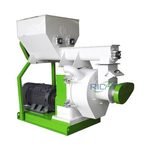
The industrial cattle feed pellet machine is one of the most important machines in a pellet-based cattle feed factory.
It compresses the prepared feed mixture through die holes to form pellets.
The desired pellet diameter can be selected by using an appropriate die.
Common cattle feed pellet sizes may include 3 mm, 4 mm, 6 mm, 8 mm, and larger sizes.
The appropriate size depends on the animal’s age, feeding system, formula, and customer requirements.
Pellet quality depends on many factors, including:
- Raw material composition
- Grinding fineness
- Moisture
- Conditioning
- Die specifications
- Roller adjustment
- Feed rate
- Operating parameters
For this reason, choosing a pellet mill should not be treated as an isolated equipment purchase. It should be considered as part of the complete production system.
13. Pellet Cooler
Fresh pellets leaving the pellet mill are usually hot.
They need to be cooled before screening and packaging.
A pellet cooler reduces the temperature and helps stabilize the moisture of the pellets.
Counterflow coolers are commonly used in industrial feed production.
Effective cooling is important because improperly cooled pellets may experience:
- Condensation
- Mold growth
- Deformation
- Reduced storage stability
- Increased product loss
The cooling capacity should match the pellet mill output.
14. Screening Machine
After cooling, pellets normally pass through a screening machine.
The screen separates qualified pellets from fines and oversized particles.
Fines may be returned to the production process depending on the system design.
Screening improves the appearance and size consistency of the finished product.
It also helps reduce the amount of powder entering the packaging system.
A properly selected screen should be matched with the desired pellet diameter and production capacity.
15. Packing Equipment
Finished cattle feed can be sold in bags or transported in bulk.
For bagged feed, an automatic packing system can include:
- Automatic weighing scale
- Bag filling machine
- Bag sewing machine
- Bag sealing system
- Conveyor
- Coding machine
- Palletizing equipment
Automatic packing can improve weighing accuracy and reduce manual labor.
The packaging size depends on the target market. Different markets may require different bag sizes.
For large livestock farms, bulk loading systems may also be used.
16. Material Conveying System
A complete cattle feed factory requires an efficient material conveying system.
Common conveying equipment includes:
- Screw conveyors
- Belt conveyors
- Bucket elevators
- Drag conveyors
- Pneumatic conveying systems
These machines transport raw materials and finished feed between processing stages.
The conveying system should be carefully designed because poor material handling can create bottlenecks and increase pellet breakage.
For example, excessive impact during transportation can increase fines after pelletizing.
Therefore, conveyors are an important part of the overall plant rather than simply auxiliary equipment.
17. Dust Collection System
Feed production generates dust during receiving, grinding, mixing, conveying, screening, and packaging.
A modern factory should therefore include a suitable dust collection system.
Dust collectors can be connected to major dust-producing points.
A well-designed dust control system can:
- Improve workshop cleanliness
- Reduce material loss
- Protect equipment
- Improve working conditions
- Support safer plant operation
The dust collection system should be designed according to the equipment configuration and local safety requirements.
18. Electrical Control System
A modern cattle feed factory needs an electrical control system to coordinate different machines.
For small plants, the control system may be relatively simple.
For larger plants, a centralized PLC-based control system can manage the production process.
The control system can monitor:
- Raw material feeding
- Batching
- Mixing
- Pelletizing
- Cooling
- Screening
- Conveying
- Packing
- Equipment alarms
Automation can improve production consistency and reduce manual mistakes.
It can also allow operators to manage multiple feed formulas more efficiently.
19. Quality Control and Laboratory Equipment
A professional feed plant should have appropriate quality-control procedures.
Raw materials should be checked before entering production, while finished feed should be tested according to product requirements.
Common parameters include:
- Moisture
- Protein
- Fat
- Fiber
- Particle size
- Pellet diameter
- Pellet durability
- Fines content
- Nutrient composition
A basic laboratory can help the factory monitor incoming materials and finished products.
Quality control is not limited to the laboratory.
The production process itself must also be controlled.
For example, inaccurate batching, poor mixing, excessive moisture, improper conditioning, or inadequate cooling can all affect the final product.
20. Water, Steam, Electricity, and Other Utilities
A feed factory requires reliable utilities.
Electricity is essential for almost every machine.
If steam conditioning is used, the plant also needs an appropriate steam supply system.
Water may be needed for certain plant operations, cleaning, steam generation, and other purposes.
Depending on the project, the plant may also require:
- Compressed air
- Drainage
- Ventilation
- Fire protection
- Lighting
- Waste management
Utility capacity should be calculated according to the complete equipment configuration.
21. Skilled Operators and Management
Machines alone cannot guarantee successful production.
A feed factory needs trained personnel to operate and maintain the equipment.
Typical positions may include:
- Production manager
- Formula or nutrition specialist
- Control-room operator
- Pellet mill operator
- Maintenance technician
- Quality-control staff
- Warehouse workers
- Packing workers
- Administrative staff
The required workforce depends on the production capacity and automation level.
A highly automated factory may require fewer manual workers than a semi-automatic facility.
Operator training should cover equipment operation, cleaning, maintenance, troubleshooting, safety, and production procedures.
22. A Good Factory Layout
All the equipment must be arranged logically.
A typical production flow can be organized as:
Raw Material Receiving → Storage → Cleaning → Grinding → Batching → Mixing → Conditioning → Pelletizing → Cooling → Screening → Packing → Finished Product Storage
The layout should minimize unnecessary movement.
Different processing sections should have sufficient space for:
- Equipment installation
- Maintenance
- Operator access
- Material transportation
- Spare parts
- Future expansion
The vertical arrangement of equipment should also be considered.
Some feed plants use multi-level structures to allow materials to move between processing stages by gravity, reducing conveying requirements.
(Learn more: https://pelletisingmachine.com/cattle-feed-production-line/)
23. Fire and Workplace Safety
Safety should be considered from the beginning of the project.
Feed mills handle large quantities of agricultural materials and generate dust during processing.
Safety measures may include:
- Dust collection
- Proper electrical installation
- Equipment grounding
- Regular cleaning
- Emergency stop systems
- Fire protection equipment
- Safe access platforms
- Operator training
The exact requirements depend on the local building and industrial safety regulations.
24. Maintenance and Spare Parts
Another requirement for a successful feed plant is a maintenance strategy.
Machines such as hammer mills and pellet mills contain wear parts that require regular inspection and replacement.
Common spare parts may include:
- Hammers
- Screens
- Dies
- Rollers
- Bearings
- Seals
- Belts
- Motors and electrical components
The factory should keep important spare parts available to reduce unexpected downtime.
Regular maintenance is generally more economical than waiting for major equipment failures.
25. Budget and Investment Planning
The total investment required to build a cattle feed plant depends on many factors.
Major cost categories include:
- Land
- Factory construction
- Storage facilities
- Processing machinery
- Conveying system
- Electrical control
- Dust collection
- Packing system
- Utilities
- Installation
- Transportation
- Commissioning
- Laboratory equipment
- Initial spare parts
The production capacity and automation level are two major factors affecting the equipment investment.
A small semi-automatic plant may have a relatively simple configuration, while a large commercial cow feed pellet plant may require extensive storage, automatic batching, centralized control, multiple pellet mills, automatic packing, and other supporting systems.
For this reason, it is better to develop the budget after determining the process and production requirements.
26. Future Expansion Capability
Investors should also consider future growth.
A plant that meets current demand may become insufficient after several years.
Future expansion may include:
- Additional pellet mills
- More raw material bins
- Larger warehouses
- Additional packing machines
- New feed formulas
- Higher production capacity
- More advanced automation
If expansion is considered during the initial factory layout, future construction can be easier and less disruptive.
27. Professional Engineering Support
Building a complete cattle feed factory involves many interconnected components.
A professional turnkey engineering supplier can help coordinate the entire project.
RICHI Manufacture, for example, can provide support covering:
- Production process design
- Equipment selection
- Factory layout design
- Complete production line configuration
- Equipment manufacturing
- Overseas transportation and customs clearance
- Installation and commissioning
- Operator training
- After-sales technical support
This approach allows the plant to be designed as an integrated system rather than as a collection of independent machines.
The supplier can also adjust the equipment configuration according to the raw materials, feed formulas, production capacity, pellet size, factory space, and investment budget.
28. What Is the Minimum Equipment Needed?
For a small pellet-based cattle feed project, the basic equipment may include:
- Raw material receiving equipment
- Cleaning equipment
- Hammer mill
- Batching system
- Feed mixer
- Pellet mill
- Pellet cooler
- Screening machine
- Packing machine
- Conveyors and elevators
- Electrical control system
A larger commercial plant may additionally require:
- Grain silos
- Multiple batching bins
- Automatic micro-dosing system
- Steam conditioning system
- Molasses addition system
- Advanced dust collection
- Automatic packing
- Palletizing
- Centralized control
- Laboratory
- Bulk loading system
The final configuration should always be customized according to the project requirements.
29. Final Checklist Before Construction
Before starting construction, the investor should confirm several points.
Production
- What feed products will be produced?
- What is the target capacity?
- What pellet sizes are required?
- How many formulas will be used?
Raw Materials
- What ingredients are available locally?
- How much storage is required?
- Do any materials require special processing?
Equipment
- Is the grinding capacity sufficient?
- Is the batching system accurate?
- Is the mixer suitable?
- Does the pellet mill match the required output?
- Are cooling and screening capacities sufficient?
Factory
- Is there enough production space?
- Is the warehouse large enough?
- Is there room for expansion?
- Can trucks enter and leave easily?
Operation
- Is the automation level appropriate?
- Are trained operators available?
- Are spare parts accessible?
- Is a maintenance plan established?
Answering these questions before construction can significantly reduce project risks.
Conclusion
So, what is needed to build a cattle feed plant?
A successful project needs much more than a pellet mill. It requires a clear production plan, reliable raw materials, suitable land, adequate storage, a complete processing system, appropriate utilities, automation, quality control, trained workers, safety measures, and professional engineering support.
The core equipment may include cleaning machines, hammer mills, batching systems, mixers, conditioners, pellet mills, coolers, screens, conveyors, packing machines, dust collectors, and electrical control systems.
The exact configuration depends on the target feed products, production capacity, raw materials, pellet specifications, factory space, automation requirements, and investment budget.
For investors planning a new cow feed plant, the most practical approach is to start with the desired production capacity and feed formula, then design the process and equipment around these requirements.
A properly engineered plant can provide stable production, consistent feed quality, efficient material handling, and greater flexibility for future growth. With a complete turnkey solution, the entire project—from process design and equipment manufacturing to installation, commissioning, and training—can be coordinated as one integrated system.