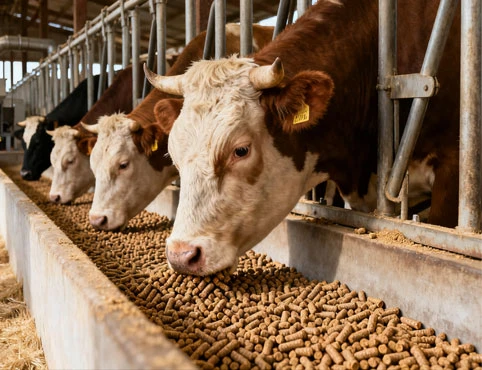




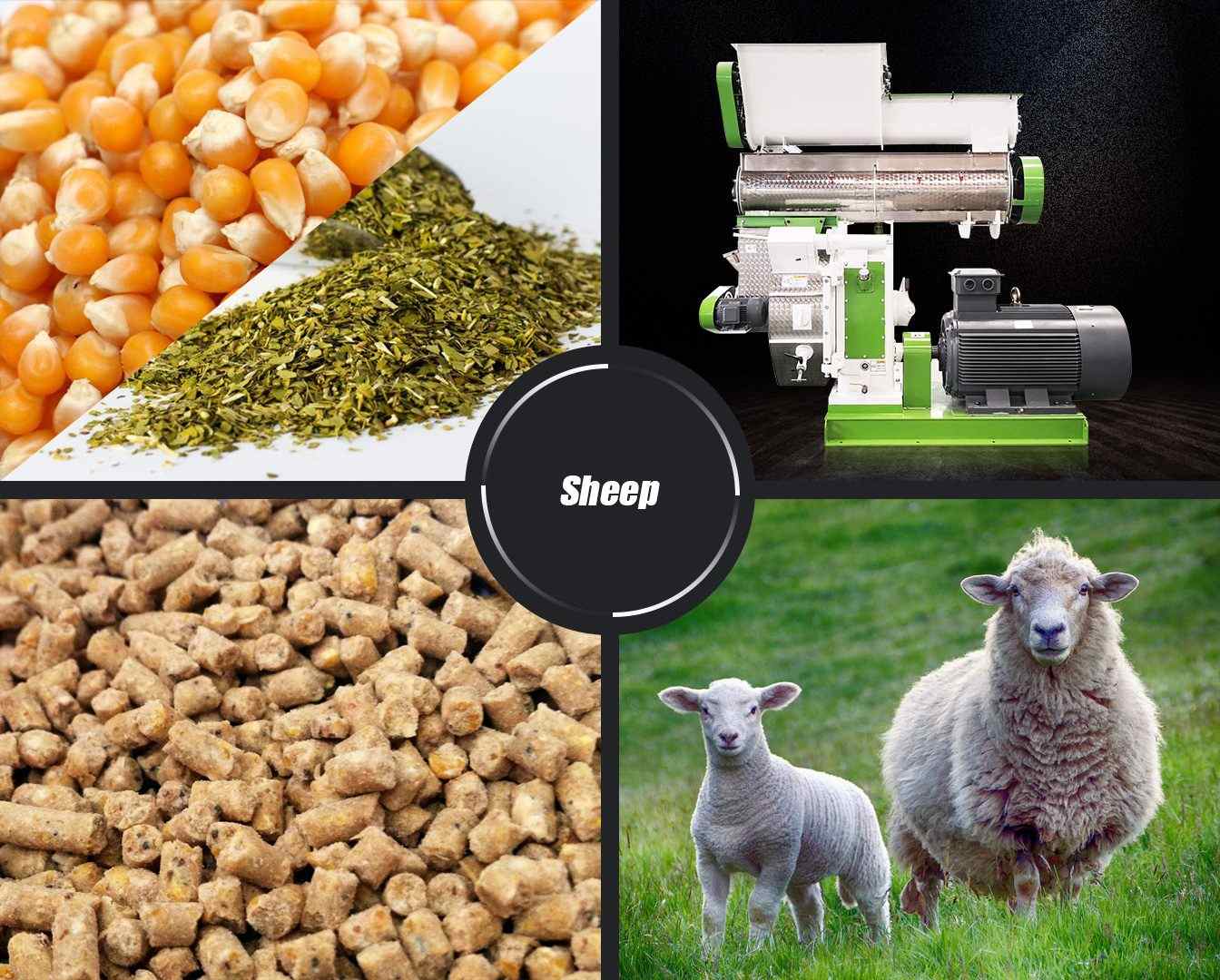
Goat feed plays a central role in the health, growth, reproduction, and productivity of goats. Whether the farm focuses on meat goats, dairy goats, breeding goats, or young kids, a suitable feeding program must provide enough energy, protein, fiber, minerals, vitamins, and water. The exact ingredients needed depend on the age, breed, body weight, production stage, forage quality, and local availability of feed materials.
Unlike simple livestock feeding, goat feed formulation requires a balance between forage and concentrated nutrients. Goats are ruminants, so adequate fiber is essential for maintaining normal rumen function. At the same time, growing kids and lactating does may need additional energy and protein that cannot always be supplied by forage alone.
Fortunately, many ingredients can be used to formulate goat feed. Corn, barley, wheat, sorghum, soybean meal, sunflower meal, wheat bran, rice bran, alfalfa, grass hay, minerals, vitamins, and other suitable local agricultural resources can all contribute to a balanced ration.
For farms that want to produce their own feed, these ingredients can be processed into mash or pellets. A properly configured goat feed making machine can help grind, mix, and process feed materials into a consistent finished product. Commercial goat feed plants can also integrate multiple machines into a complete production line.
This article explains the main ingredients needed to make goat feed, how each ingredient contributes to nutrition, how to formulate a balanced ration, and how feed ingredients can be processed efficiently.
1. What Nutrients Do Goats Need?
Before selecting ingredients, it is important to understand the nutrients goats require.
A complete goat feeding program generally needs to provide:
- Energy
- Protein
- Fiber
- Minerals
- Vitamins
- Water
These nutrients work together.
Energy supports maintenance, growth, movement, reproduction, pregnancy, and milk production. Protein is required for muscle development, tissue repair, growth, and milk synthesis. Fiber supports rumen activity and healthy digestion. Minerals and vitamins support physiological processes, bone development, reproduction, immunity, and metabolism.
The exact requirements vary depending on the goat’s production stage.
For example, a growing kid requires nutrients for rapid tissue development, while a mature goat may need a lower nutrient density when it is not pregnant or producing milk.
2. Forage Is a Major Ingredient in Goat Diets
Forage is one of the most important components of goat nutrition.
Common forage resources include:
- Alfalfa hay
- Grass hay
- Clover
- Timothy
- Napier grass
- Rhodes grass
- Pasture grass
- Legume forage
- Suitable crop residues
Forage provides structural fiber and contributes energy, protein, minerals, and other nutrients.
The nutritional value of forage varies according to its species, maturity, harvesting method, drying conditions, and storage.
Young, leafy forage is often more nutritious than mature, highly fibrous material.
Therefore, farmers should evaluate forage quality instead of assuming that all hay has the same nutritional value.
3. Alfalfa
Alfalfa is a valuable forage ingredient for many goat production systems.
It can provide:
- Protein
- Fiber
- Calcium
- Energy
- Other nutrients
High-quality alfalfa hay is particularly useful in diets for growing goats and lactating does when additional protein and minerals are required.
Alfalfa can be fed as long-stem hay, chopped forage, or processed into meal or pellets.
When incorporated into manufactured feed, alfalfa may need to be chopped or ground before mixing and pelleting.
4. Grass Hay
Grass hay is another common feed ingredient.
Examples include:
- Timothy hay
- Rhodes grass hay
- Bermuda grass hay
- Other locally available grass hay
Grass hay primarily provides fiber but can also contribute energy and protein depending on quality.
The proportion of grass hay in the diet should be adjusted according to the quality of the forage and the nutritional requirements of the goats.
5. Corn as an Energy Ingredient
Corn is one of the most common energy ingredients used in livestock feed.
It contains a high proportion of starch and can provide concentrated energy.
Corn can be processed into:
- Ground corn
- Cracked corn
- Corn meal
When making pelleted goat feed, corn is usually ground to an appropriate particle size before mixing.
However, corn should not be treated as a complete feed by itself. It needs to be combined with protein, fiber, minerals, vitamins, and other nutrients to form a balanced ration.
6. Barley
Barley is another grain that can be used in goat feed.
It provides:
- Energy
- Starch
- Some protein
Barley may be locally attractive in regions where it is readily available.
As with other grains, barley should be processed appropriately before being incorporated into a complete feed.
The inclusion rate should depend on the overall nutritional balance of the formula.
7. Wheat and Sorghum
Wheat can provide energy and protein and may be used in some goat feed formulas.
Sorghum can also be useful, especially in regions where it is an important local crop.
Both ingredients can potentially replace part of the corn component depending on their nutritional characteristics and price.
However, the formulation should be adjusted according to the actual nutrient contribution of each ingredient rather than using a simple one-for-one substitution.
8. Wheat Bran
Wheat bran is a by-product of wheat milling and can be a useful feed ingredient.
It contributes:
- Fiber
- Protein
- Energy
- Minerals
Wheat bran can also help improve the physical characteristics of some feed mixtures.
However, it should be used as part of a balanced ration rather than as the sole source of fiber or energy.
9. Rice Bran
Rice-producing regions often have significant quantities of rice bran available.
Rice bran can contribute:
- Energy
- Fat
- Protein
- Fiber
- Minerals
Because of its relatively high fat content, rice bran needs to be stored properly to reduce the risk of rancidity.
Fresh, clean rice bran can be a useful component of economical goat feed formulas.
10. Soybean Meal
Soybean meal is one of the most widely used protein sources in animal feed.
It provides high-quality protein and contributes essential amino acids.
It can be particularly useful when formulating diets for:
- Growing kids
- Lactating does
- Pregnant goats
- Breeding animals
The inclusion rate should be determined according to the overall protein requirement and the contribution of other ingredients.
11. Sunflower Meal
Sunflower meal is another possible protein source.
It is a by-product of sunflower oil production and can provide:
- Protein
- Fiber
- Minerals
Its nutritional composition can vary depending on how much of the seed hull remains after processing.
In some regions, sunflower meal may be more economical than soybean meal.
The appropriate inclusion level should be determined according to its nutritional analysis.
12. Rapeseed and Canola Meal
Rapeseed or canola meal may also be used as a protein ingredient where it is locally available.
It provides protein and other nutrients.
However, different varieties and processing methods can result in different nutritional profiles.
Therefore, feed manufacturers should consider the specific characteristics of the material when developing a formula.
13. Peanut Meal
Peanut meal can be another protein source in regions where peanuts are widely processed.
It can contribute substantial protein to the ration.
However, storage and quality control are especially important for peanut-derived materials because poor storage conditions can increase the risk of mold and mycotoxin contamination.
Only suitable, tested materials should be incorporated into goat feed.
14. Cassava Products
Cassava is widely available in some tropical and subtropical regions.
Processed cassava products can provide energy.
Possible forms include:
- Cassava meal
- Cassava chips
- Cassava flour
However, cassava should be appropriately processed before use because raw cassava can contain compounds that require proper treatment.
The inclusion level should be determined according to the product’s nutritional characteristics and safety.
15. Molasses
Molasses can be used in some livestock feed formulas as an energy source and palatability enhancer.
It may help:
- Improve feed acceptance
- Reduce dust
- Provide readily available energy
- Improve pellet binding in certain formulas
Because molasses is a liquid ingredient, it needs to be added carefully during the mixing or conditioning process.
Excessive liquid addition can affect pellet quality and storage stability.
16. Vegetable Oil
Vegetable oils can increase the energy density of goat feed.
Potential sources include:
- Soybean oil
- Palm oil
- Canola oil
- Other suitable feed-grade vegetable oils
Oil can also reduce dust and improve the physical properties of some feed mixtures.
However, the amount of added oil should be carefully controlled because excessive fat may negatively affect feed processing and animal nutrition.
17. Minerals
Minerals are essential components of goat feed.
Important minerals include:
- Calcium
- Phosphorus
- Magnesium
- Sodium
- Potassium
- Zinc
- Copper
- Selenium
Calcium and phosphorus are particularly important for skeletal development and production.
Mineral requirements vary depending on age, pregnancy, lactation, forage composition, and other dietary factors.
A suitable mineral premix can help provide trace minerals and other required nutrients.
However, supplementation should be based on nutritional requirements rather than excessive addition.
18. Vitamins
Vitamins support many physiological processes.
Depending on the diet and production system, vitamin supplementation may be used to help meet requirements for:
- Vitamin A
- Vitamin D
- Vitamin E
- Other vitamins
The need for supplementation can depend on forage quality, storage, sunlight exposure, animal condition, and the composition of the complete diet.
A professional feed formulation should determine the appropriate supplementation strategy.
19. Salt
Salt provides sodium and chloride and can be an important part of livestock diets.
Salt can be supplied separately or incorporated into a complete feed formula.
The amount must be controlled carefully because excessive salt intake can create problems, particularly when water availability is inadequate.
Clean drinking water should always be available.
20. Water Is an Essential Part of Goat Feeding
Although water is not an ingredient that goes into every pellet, it is an essential component of goat nutrition.
Goats should have regular access to clean water.
Water requirements increase under conditions such as:
- Hot weather
- High feed intake
- Pregnancy
- Lactation
- Increased activity
A lack of water can reduce feed intake and negatively affect production performance.
21. Agricultural By-Products
Using suitable agricultural by-products can reduce feed costs.
Potential materials include:
- Rice bran
- Wheat bran
- Oilseed meals
- Corn-processing by-products
- Other suitable crop-processing residues
These materials can provide useful nutrients while reducing dependence on expensive conventional feed ingredients.
However, agricultural by-products vary greatly in quality.
They should be evaluated for:
- Nutritional value
- Moisture
- Fiber
- Contamination
- Storage stability
22. Can Straw Be Used in Goat Feed?
Some crop residues can contribute fiber to goat diets.
Examples may include:
- Wheat straw
- Rice straw
- Corn stalks
- Other suitable crop residues
However, highly fibrous residues generally have lower nutritional value than high-quality forage.
If crop residues are used, appropriate processing and nutritional balancing may be necessary.
Grinding, chopping, treatment, or blending with higher-quality ingredients may improve their utilization depending on the specific material.
23. How to Balance Goat Feed Ingredients
The key to successful goat feed production is not simply choosing many ingredients.
The ingredients must be combined according to nutritional requirements.
A balanced feed formula should consider:
Energy
Provided primarily by grains, certain by-products, fats, and forage.
Protein
Provided by legumes, oilseed meals, forage, and other protein ingredients.
Fiber
Provided primarily by forage and suitable fibrous ingredients.
Minerals
Provided by forage, mineral sources, and premixes.
Vitamins
Provided by forage and appropriate supplementation.
The final formula should be designed according to the specific class of goat.
24. Feed Ingredients for Growing Kids
Growing kids require sufficient nutrients to support rapid development.
Their diet should provide adequate:
- Energy
- Protein
- Minerals
- Vitamins
- Fiber
High-quality forage can be combined with an appropriately formulated concentrate or pellet.
The feed should be easy for young animals to consume and should be introduced gradually.
25. Feed Ingredients for Dairy Goats
Dairy goats have higher nutrient demands during lactation.
Their feed program may need additional:
- Energy
- Protein
- Minerals
High-quality forage such as alfalfa can contribute valuable nutrients.
Concentrate pellets can supplement the ration where forage alone cannot meet production requirements.
The amount of concentrate should be adjusted according to milk production and body condition.
26. Feed Ingredients for Meat Goats
Meat goats require a feeding program that supports efficient growth and desirable body condition.
A combination of:
- Quality forage
- Energy ingredients
- Protein sources
- Minerals
- Vitamins
can be used to formulate the ration.
The precise formula should reflect growth rate, forage quality, breed, and production goals.
27. Feed Ingredients for Pregnant Does
Pregnant does need appropriate nutrition to support both their own maintenance and fetal development.
Nutrient requirements increase as pregnancy progresses.
The diet should be adjusted gradually rather than making sudden changes.
Particular attention should be paid to energy, protein, minerals, and overall feed intake during late pregnancy.
28. Why Process Goat Feed into Pellets?
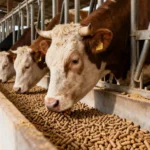
Pelleting can provide several practical advantages.
Compared with loose mixtures, pellets can be:
- Easier to transport
- Easier to store
- More convenient to distribute
- More uniform
- Less dusty
- Less prone to ingredient separation
Pelleting can also help integrate different ingredients into a consistent physical form.
For commercial goat farms, this can simplify feed management.
29. Using a Goat Feed Making Machine
Once the feed formula has been developed, the ingredients can be processed using appropriate equipment.
A typical process is:
Cleaning → Grinding → Batching → Mixing → Conditioning → Pelleting → Cooling → Screening → Packaging
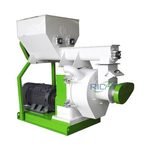
A goat feed making machine can refer to a pellet mill or a broader feed processing system depending on the application.
For small-scale farms, a compact pellet machine may be sufficient.
For commercial operations, a complete feed production line can include multiple pieces of specialized equipment.
30. Grinding Before Pelleting
Most grain-based ingredients should be reduced to a suitable particle size before pelleting.
A hammer mill can process materials such as:
- Corn
- Wheat
- Barley
- Sorghum
- Dried cassava
Proper grinding improves mixing and pellet formation.
However, excessive grinding increases energy consumption.
The correct particle size should be determined based on the formula, pellet diameter, and animal requirements.
31. Batching and Mixing
Accurate batching ensures that each ingredient is added according to the formula.
After batching, the materials are mixed.
A high-quality mixer should distribute:
- Grains
- Protein meals
- Bran
- Minerals
- Vitamins
- Other ingredients
uniformly throughout the batch.
Mixing accuracy is especially important when the formula contains small amounts of mineral or vitamin premixes.
https://pelletisingmachine.com/animal-feed-mixer-machine
32. Conditioning and Pelletizing
After mixing, the feed may be conditioned with steam.
The conditioned feed then enters the pellet mill.
Inside the machine, rollers compress the feed through die holes to form pellets.
Pellet quality depends on:
- Formula
- Particle size
- Moisture
- Conditioning
- Die specifications
- Roller adjustment
- Machine condition
A properly maintained goat feed making machine can produce stable pellets with consistent dimensions.
33. Cooling and Screening
Fresh pellets need to be cooled before storage.
A cooler removes excess heat and moisture.
The pellets are then screened to remove fines and broken pieces.
Fines can often be recycled.
This process helps improve the appearance and physical quality of the finished product.
34. Selecting Pellet Size
Pellet diameter should match the age and feeding system of the goats.
Smaller pellets may be suitable for young kids.
Larger pellets may be appropriate for adult goats.
The pellet size can be changed by using different dies.
A flexible goat feed production system can therefore manufacture several pellet specifications.
35. How to Reduce Goat Feed Production Costs
Ingredient costs often represent the largest part of feed expenses.
Several strategies can help reduce costs.
Use Local Ingredients
Local grains and agricultural by-products may reduce transportation costs.
Compare Nutritional Costs
Choose ingredients according to their nutritional contribution rather than purchase price alone.
Reduce Waste
Improve storage, handling, and screening.
Optimize Processing
Avoid excessive grinding and inefficient pelleting.
Maintain Equipment
Worn components can reduce production efficiency.
Purchase Strategically
Where storage conditions are suitable, bulk purchasing during favorable price periods may reduce costs.
36. Raw Material Quality Control
Low-quality ingredients can reduce animal performance and create health risks.
Before ingredients enter the production process, check for:
- Mold
- Moisture
- Foreign materials
- Insect damage
- Unusual odors
- Nutritional consistency
For commercial feed production, laboratory analysis can provide more accurate information about protein, fiber, fat, minerals, and other nutritional parameters.
37. Storage of Feed Ingredients
Proper storage helps preserve ingredient quality.
Storage facilities should be:
- Dry
- Clean
- Ventilated
- Pest controlled
- Protected from rain
- Easy to inspect
Ingredients should be rotated regularly.
Special attention should be given to high-fat materials such as rice bran and vegetable oils because they can deteriorate during long-term storage.
38. Small-Scale Goat Feed Production
A small goat farm may not require a fully automated feed factory.
A compact setup could include:
Crusher → Mixer → Pellet Machine → Simple Cooler → Screener
Some operations can be performed manually.
This configuration can be useful for farmers who have local feed resources and want to produce feed according to their own formulas.
As the herd grows, additional equipment can be installed.
39. Commercial Goat Feed Production
A commercial feed manufacturer may require:
- Raw material cleaning system
- Hammer mill
- Automatic batching system
- Mixer
- Steam conditioner
- Ring-die pellet mill
- Cooler
- Screener
- Packaging machine
- Dust collection system
- Electrical control system
This integrated system can provide higher production efficiency and consistent feed quality.
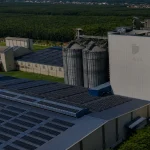
(Learn about RICHI industrial livestock feed production line )
40. RICHI Goat Feed Production Solutions
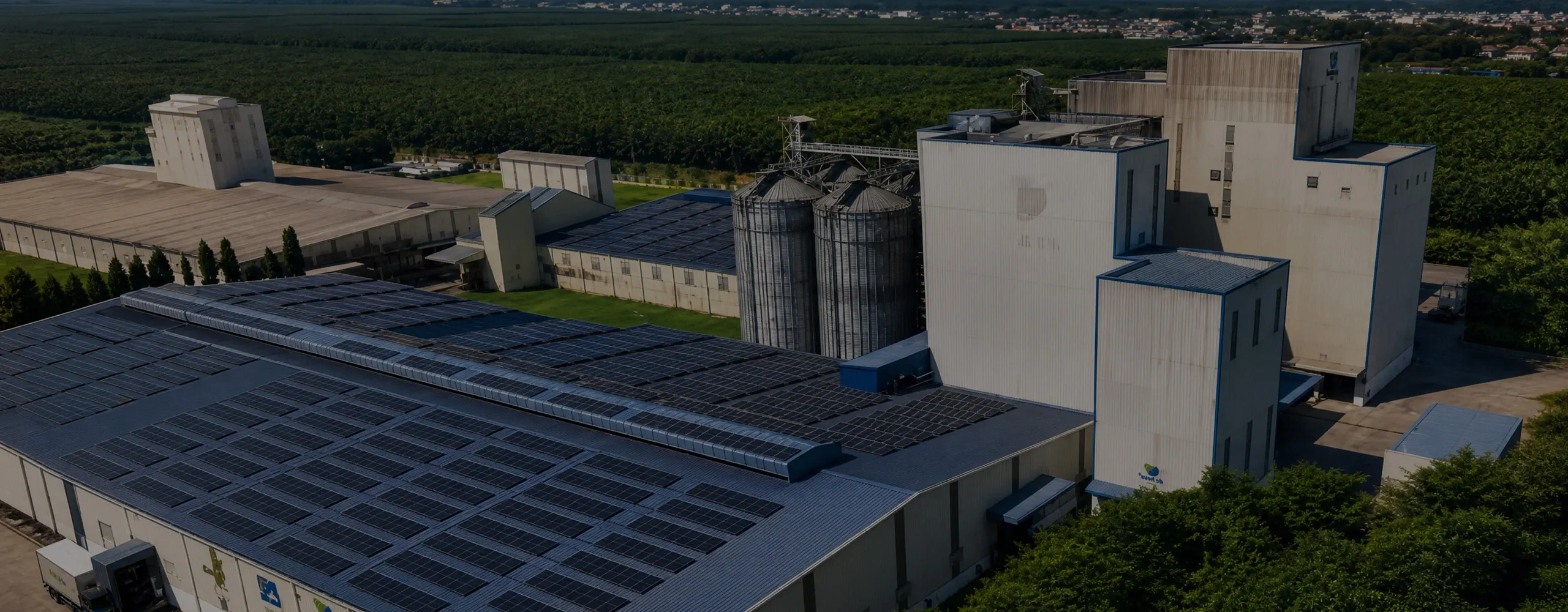
RICHI Machinery provides customized feed processing equipment and turnkey solutions for goat farms and commercial livestock feed manufacturers.
The production system can be designed according to:
- Goat feed formula
- Raw material characteristics
- Production capacity
- Pellet size
- Factory layout
- Automation requirements
- Investment budget
A complete system can integrate:
Raw Material Receiving → Cleaning → Crushing → Batching → Mixing → Conditioning → Pelletizing → Cooling → Screening → Packaging
For farms producing feed on a smaller scale, an appropriately sized goat feed making machine can provide a practical solution.
For commercial feed plants, RICHI can configure larger ring-die pellet mills and supporting equipment to create a complete automated production system.
Turnkey services can cover customized production line design, equipment manufacturing, overseas transportation and customs clearance, on-site installation and commissioning, operator training, spare parts supply, and long-term technical support.
Conclusion
So, what ingredients are needed to make goat feed?
There is no single formula suitable for every goat farm. The best feed formula depends on the animals, production objectives, forage quality, local resources, ingredient prices, and nutritional requirements.
The main ingredient categories include forage, energy sources, protein sources, fiber sources, minerals, vitamins, and water. Alfalfa, grass hay, corn, barley, wheat, sorghum, wheat bran, rice bran, soybean meal, sunflower meal, rapeseed meal, peanut meal, cassava products, molasses, vegetable oil, and suitable agricultural by-products can all potentially contribute to a balanced goat feeding program.
The important point is that ingredients should not simply be combined based on availability or price. They need to be evaluated for nutritional value, safety, digestibility, and compatibility with the target animals. Growing kids, pregnant does, lactating dairy goats, meat goats, and breeding animals have different nutritional requirements and should receive appropriately formulated diets.
For farms that want to manufacture their own feed, processing technology is equally important. A suitable goat feed making machine can help transform properly prepared ingredients into uniform pellets. With cleaning, grinding, accurate batching, mixing, conditioning, pelleting, cooling, screening, and packaging, farmers can establish a more controlled feed production process.
Ultimately, high-quality goat feed comes from the combination of good ingredients, balanced formulation, proper processing, reliable equipment, and effective feeding management. When these elements are carefully coordinated, goat producers can improve feed utilization, control production costs, and create better conditions for healthy growth, reproduction, milk production, and overall farm performance.