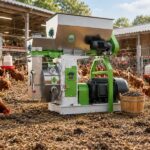

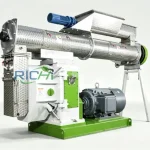

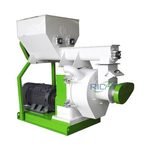


Italy has a long industrial tradition in mechanical equipment, and the phrase “Italian pellet machine” is often associated with European engineering, compact equipment, and biomass processing. Buyers searching for an italian pellet machine are usually not looking only for a machine that can compress biomass. They are often comparing equipment design, production capacity, energy consumption, durability, automation, and the level of technical support available after installation.
For biomass businesses, farms, sawmills, wood-processing companies, and renewable-energy projects, the right pellet machine should be selected according to the actual raw material and production target. A machine that performs well with clean sawdust may behave very differently when processing wood chips, straw, bagasse, rice husk, or other agricultural residues.
Understanding the entire production process is therefore more important than choosing equipment based on country of origin or purchase price alone.
Why Are Pellet Machines Important in Biomass Processing?
Biomass materials are often generated in loose, irregular forms. Sawdust from sawmills, wood shavings from furniture factories, forestry residues, and agricultural by-products can have low bulk density and require substantial storage space.
Pelletizing compresses these materials into dense, standardized particles. The finished pellets are easier to transport, store, and feed into suitable heating systems.
For many projects, the pellet mill is the core piece of equipment responsible for densification. However, its performance depends on what happens before and after the pelletizing stage.
A typical biomass pellet production process may include:
Raw material receiving → size reduction → drying → intermediate storage → pelletizing → cooling → screening → packaging
Not every project requires every stage. The final configuration depends on the condition of the raw material, the desired production capacity, and the characteristics of the finished pellets.
Does the Raw Material Matter More Than the Machine Brand?
In many cases, yes.
The same pellet mill configuration cannot automatically provide identical results with all biomass materials. Different raw materials have different moisture levels, fiber structures, densities, ash contents, and natural binding characteristics.
Sawdust, for example, is relatively uniform and may require less size reduction than larger wood residues. Wood chips often require additional crushing before entering the pellet mill. Agricultural residues may contain more fiber or mineral contamination and may require a different preparation process.
This means that buyers should provide detailed information about their feedstock before selecting equipment. A supplier should ideally know the material type, moisture content, particle size, expected capacity, target pellet diameter, and intended application.
How Does a Biomass Pellet Machine Work?
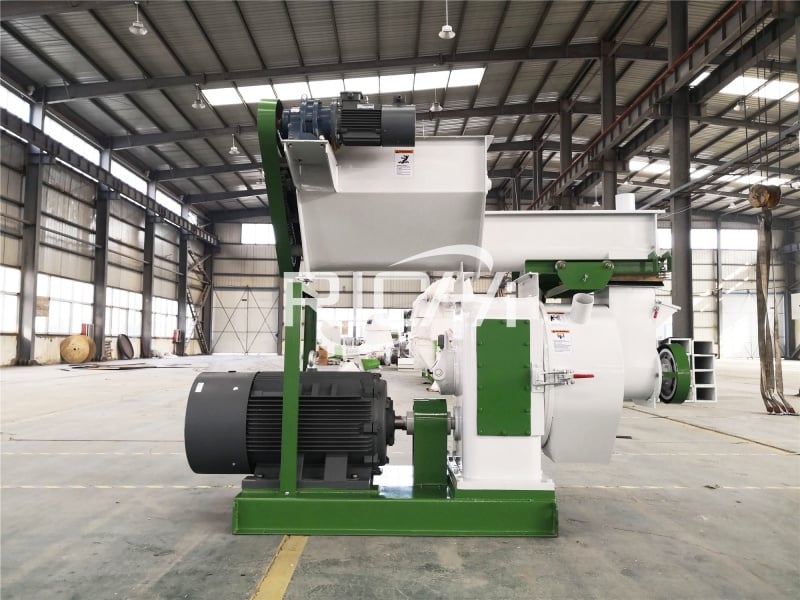
The basic principle of pelletizing is mechanical compression.
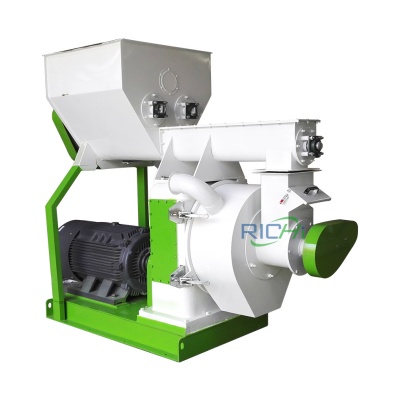
Prepared biomass is fed continuously into the pellet mill. Rollers apply pressure to force the material through holes in a die. As the compressed material passes through the die openings, it forms cylindrical strands that are cut into pellets of the desired length.
Heat may be generated through friction and compression, and natural lignin present in many woody materials can contribute to binding under suitable conditions.
The effectiveness of the process depends on several variables, including:
- Raw material moisture
- Particle size
- Feed rate
- Die design
- Roller condition
- Motor power
- Material composition
This is why simply comparing motor power or rated output does not provide enough information to judge a pellet machine.
What About Wood Chips?
Wood chips are frequently generated by sawmills, forestry operations, wood-processing facilities, and biomass recycling businesses. However, their particle size is often too large for direct pelletizing.
For projects using this type of feedstock, a wood chip pellet machine 2 ton per hour may be considered as part of a medium-capacity biomass fuel production system.
The key point is that the pellet machine does not necessarily process raw wood chips directly. A crusher or hammer mill may be required first to reduce the material to a suitable size.
The drying stage may also be important. If the wood chips contain too much moisture, a dryer can be installed before the pellet mill. Rotary dryers are common for large biomass projects, while belt drying systems may be considered when a lower-temperature continuous drying process is preferred.
How Should Production Capacity Be Selected?
Capacity should be based on the amount of raw material available, not simply the desired pellet output.
Suppose a company has access to a limited quantity of sawdust every day. Purchasing a very large pellet mill may create unnecessary investment because there is not enough raw material to keep it operating continuously.
On the other hand, if a large sawmill generates many tons of dry sawdust every day, a low-capacity machine may become a bottleneck.
A practical calculation should consider:
Available raw material per day × operating hours × expected pellet recovery rate
For example, a company generating 40 tons of suitable biomass per day may organize production around a capacity that can process this volume within the available working schedule.
The actual output can vary because biomass density, moisture, formulation, and machine operating conditions affect the production rate.
Is a Small Pellet Machine Suitable for Commercial Production?
Small machines are often suitable for farms, workshops, small biomass businesses, and new producers testing local markets.
A smaller system can reduce the initial investment and may require less factory space. It can also simplify daily operation when labor resources are limited.
However, businesses planning commercial fuel production should consider whether a small machine can meet long-term demand.
Increasing production by simply extending operating hours may not always be the most efficient strategy. Maintenance intervals, labor requirements, electricity consumption, and downtime should all be included in the calculation.
A modular production system can provide a compromise. A company can begin with one pellet mill and later add another unit or upgrade upstream and downstream equipment as the market develops.
What Auxiliary Equipment Is Usually Required?
A pellet mill does not work in isolation.
A complete biomass pellet project may include:
Hammer Mill or Crusher
The crusher reduces oversized material into a more suitable particle size. This is especially important when processing wood chips, branches, straw, or other irregular biomass.
Dryer
Drying is essential when raw material moisture is too high for stable pelletizing. The dryer should be selected according to initial moisture, target moisture, heating source, and required throughput.
Mixer
For single-material wood pellet projects, a mixer may not always be necessary. However, when multiple biomass materials are blended, uniform mixing becomes more important.
Cooler
Pellets can leave the pellet mill hot and relatively soft. Cooling reduces temperature and helps stabilize the finished product.
Screener
A screener separates fines and broken pellets from finished products. Fines can often be returned to the pelletizing process.
Packaging System
For commercial sales, automatic weighing and packing can reduce labor and improve consistency.
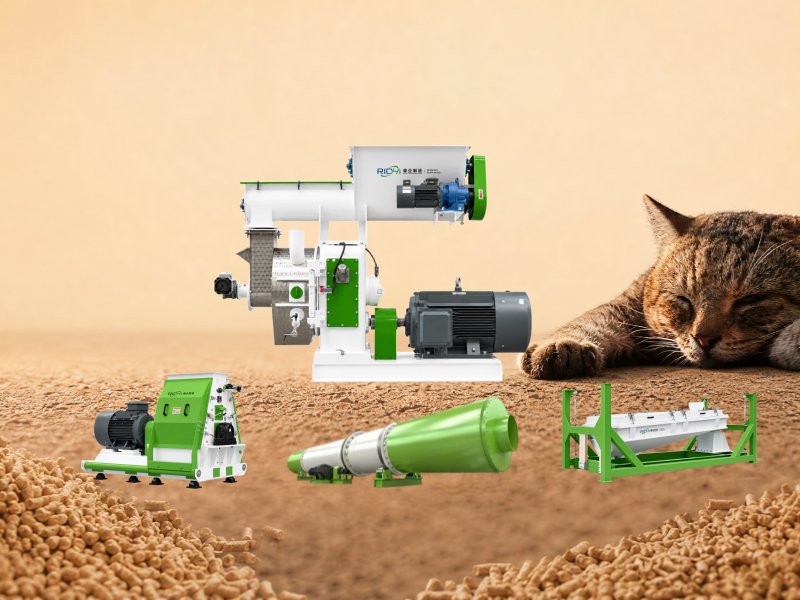
Together, these components form a more complete pellet machine for sale solution rather than a standalone pellet press.
What Should Buyers Compare Beyond the Purchase Price?
The cheapest quotation is not always the most economical choice.
A complete evaluation should include machine structure, component quality, motor efficiency, die and roller materials, spare parts, maintenance requirements, and after-sales support.
The availability of replacement parts is particularly important for commercial operations. Pellet dies, rollers, bearings, and other wear components eventually require inspection or replacement.
A supplier that provides technical support, installation guidance, operator training, and spare-parts availability can reduce the risk of prolonged production interruptions.
How Important Is Electricity Consumption?
Electricity can become a significant part of pellet production costs, especially for plants operating continuously.
However, total power consumption should not be judged by motor rating alone. The energy required to prepare the raw material may account for a considerable share of the total.
For wet biomass, drying can consume more energy than the pellet mill itself. If large wood chips are being processed, crushing can also become a major energy-consuming stage.
Therefore, the overall energy efficiency of the complete production line is more useful than comparing pellet mill motors in isolation.
How Does Pellet Diameter Affect Production?
Pellet diameter should be determined according to the intended application.
Residential biomass heating applications often use relatively small pellets, while some industrial users may accept other dimensions depending on their combustion systems.
Changing the die specification can affect output, energy consumption, and pellet quality. Smaller holes generally require the material to pass through narrower channels, which can influence production efficiency.
Therefore, buyers should confirm the required pellet size before ordering the die.
Can One Biomass Plant Process Different Materials?
In many cases, yes, but not always without modifications.
A production line designed for clean sawdust may also process certain wood residues after suitable preparation. However, switching to straw, rice husk, bamboo waste, or agricultural residues can change the requirements for crushing, drying, feeding, and pelletizing.
Some projects intentionally design flexible production systems that can use multiple local biomass resources throughout the year. This can be useful when the availability of one raw material changes seasonally.
However, different materials should be tested before assuming that one configuration will deliver the same output and pellet quality.
What Factory Conditions Should Be Considered?
Factory layout can have a major impact on production efficiency.
Raw material storage should be located close to the receiving section. Crushers, dryers, pellet mills, coolers, and packaging machines should be positioned to minimize unnecessary material movement.
Ventilation and dust control are also important in biomass processing facilities. Fine particles can accumulate around crushing and pelletizing equipment, so appropriate housekeeping and safety measures should be incorporated into the plant design.
Maintenance access should also be considered. Operators need sufficient space around major machines for inspection, cleaning, and replacement of wearing parts.
Should Buyers Choose Equipment Based on Country of Origin?
Country of origin can be one consideration, but it should not be the only criterion.
European equipment may be attractive to buyers looking for particular engineering standards or machine designs, while manufacturers from other regions may offer different combinations of customization, capacity, pricing, and technical service.
The more important questions are:
- Can the machine process the intended raw material?
- Does it meet the required output?
- Are the components suitable for continuous operation?
- Are spare parts available?
- Can the supplier provide installation and technical support?
- Can the equipment be customized for the project?
These questions provide a more practical basis for comparison than country of origin alone.
Why Should Material Testing Be Completed Before Ordering?
A small production test can help identify problems before a large system is installed.
Testing can determine whether the raw material needs additional drying, whether the particle size is appropriate, what die specification should be used, and whether the target pellet durability can be achieved.
For investors building a new biomass pellet plant, testing may also help estimate the expected output and energy consumption.
This is especially valuable when using agricultural residues or mixed biomass materials because their characteristics can vary considerably between batches.
Conclusion
Choosing a pellet machine for biomass production involves much more than comparing equipment prices. Raw material characteristics, preparation requirements, production capacity, pellet size, energy consumption, factory layout, auxiliary equipment, and after-sales support all influence the success of a project.
An italian pellet machine may attract buyers looking for European-style equipment or specific machine characteristics, but the final decision should still be based on the actual application. A machine that fits the raw material and production target will generally be more valuable than one selected simply because of its appearance, origin, or advertised output.
For businesses evaluating biomass pellet production, the most practical approach is to test the raw material, determine realistic capacity requirements, design the complete process, and compare suppliers based on both equipment performance and long-term service.
Before finalizing a project, visit this site to review additional pellet processing information and compare different equipment approaches for biomass production.