



Rabbit farming has become an increasingly industrialized sector of modern agriculture. As demand for rabbit meat, fur, and laboratory animals continues to rise, feed production has evolved from small-scale manual mixing to highly automated industrial systems. Today, a complete rabbit feed production facility relies on a series of specialized machines working together to transform raw agricultural materials into balanced, high-quality feed pellets.
At the center of this system is the rabbit feed pellet mill, a key machine responsible for shaping powdered feed into durable, digestible pellets. However, the pellet mill is only one part of a much larger system. A modern rabbit feed production line includes multiple stages, each requiring specific machinery to ensure efficiency, consistency, and nutritional quality.
This article explains in detail what machines are used in rabbit feed production, how they work together, and why each one is essential for producing high-quality rabbit feed on a commercial scale.
1. Overview of a Rabbit Feed Production System
A complete rabbit feed production system is typically a fully integrated livestock feed production line designed to handle large-scale manufacturing. The system transforms raw materials such as grains, grass meal, and protein sources into finished rabbit feed pellets.
The production process generally includes:
- Raw material handling
- Grinding (size reduction)
- Mixing (formulation)
- Pelletizing (rabbit feed pellet mill)
- Cooling
- Screening
- Packaging
Each stage requires specific machines designed for efficiency and precision.
2. Raw Material Handling Equipment
2.1 Storage Silos
Before production begins, raw materials must be stored properly. Silos are used to store:
- Corn
- Soybean meal
- Wheat bran
- Alfalfa meal
- Grass powder
Silos protect materials from moisture, contamination, and pests.
2.2 Conveying Systems
Once materials are stored, they must be transported to different production stages. Conveying systems include:
- Screw conveyors
- Bucket elevators
- Belt conveyors
These machines ensure continuous and automated material flow throughout the production line.
Efficient conveying systems reduce labor requirements and improve production speed.
3. Grinding Machines (Hammer Mills)
Grinding is one of the most important steps in rabbit feed production. Rabbits require finely processed feed for proper digestion.
3.1 Hammer Mill
The hammer mill is the most commonly used grinding machine. It works by:
- Feeding raw materials into the chamber
- High-speed rotating hammers crushing materials
- Screens controlling particle size
- Outputting uniform powder
Benefits of hammer mills:
- Fine and uniform particle size
- Improved feed digestibility
- Better mixing performance
- Reduced pellet machine wear
Without proper grinding, the rabbit feed pellet mill cannot produce high-quality pellets.
4. Mixing Machines
4.1 Horizontal Ribbon Mixer
The most widely used mixing machine in rabbit feed production is the horizontal ribbon mixer.
It ensures all ingredients are evenly distributed, including:
- Energy sources (corn, wheat)
- Protein sources (soybean meal)
- Fiber sources (alfalfa, grass meal)
- Vitamins and minerals
How it works:
- Double ribbons rotate in opposite directions
- Materials are lifted, folded, and mixed
- Uniform blending is achieved within minutes
Advantages:
- High mixing uniformity
- Fast operation
- Suitable for large batches
- Low energy consumption
Proper mixing ensures that every pellet produced by the rabbit feed pellet mill contains balanced nutrition.
5. Conditioning Machines
Before pelletizing, feed material often passes through a conditioner.
5.1 Steam Conditioner
A conditioner adds steam and moisture to the feed mixture.
Benefits include:
- Improved pellet binding
- Better starch gelatinization
- Enhanced digestibility
- Increased pellet hardness
Conditioning prepares the material for efficient compression in the rabbit feed pellet mill.
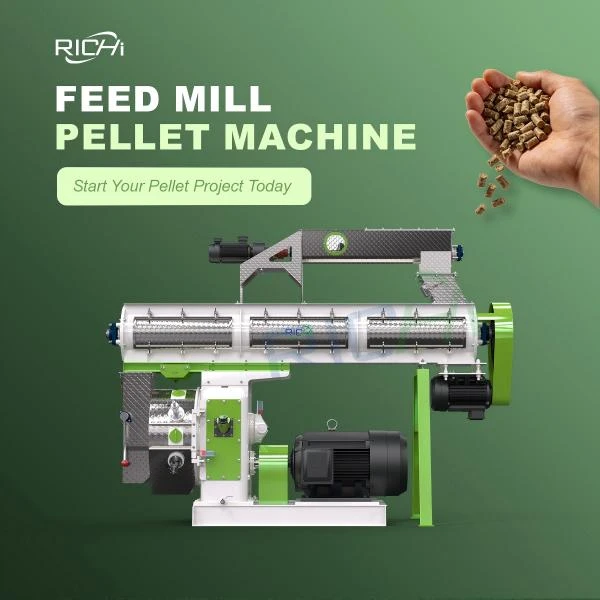
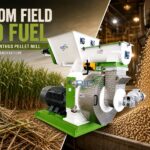
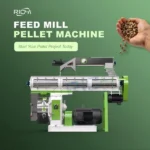
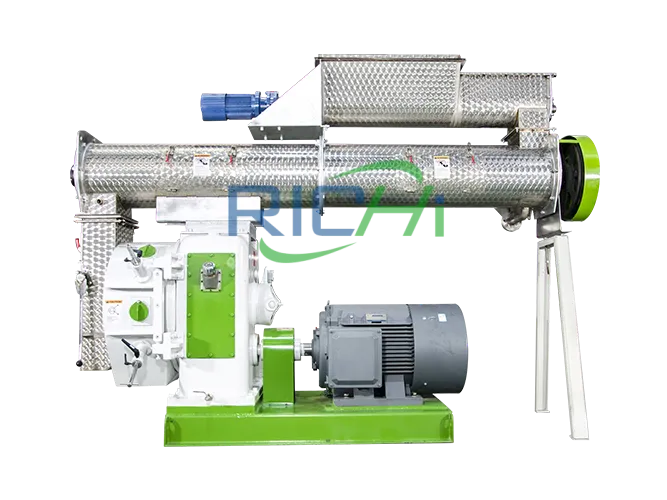
6. The Core Machine: Rabbit Feed Pellet Mill
The rabbit feed pellet mill is the most critical machine in the entire production system. It determines pellet quality, durability, and feeding performance.
6.1 Working Principle
The machine works as follows:
- Conditioned feed enters the pellet chamber
- Rollers press material against a rotating die
- High pressure and friction generate heat
- Feed is compressed into solid pellets
- Cutting blades adjust pellet length
6.2 Key Components
- Die (flat die or ring die)
- Rollers
- Motor system
- Feeding system
- Cutting device
6.3 Importance in Rabbit Feed Production
The rabbit feed pellet mill ensures:
- Uniform pellet size
- Stable density
- Improved digestibility
- Reduced feed waste
- Prevention of selective feeding
Rabbits are sensitive animals, so pellet quality directly impacts growth and health. (useful content)
7. Drying Machines
7.1 Rotary Dryer
After pelletizing, feed pellets often contain excess moisture.
The rotary dryer reduces moisture content to safe levels.
Benefits:
- Prevents mold growth
- Improves storage stability
- Increases pellet hardness
- Extends shelf life
Drying is essential for commercial feed production.
8. Cooling Machines
8.1 Counterflow Cooler
Fresh pellets from the rabbit feed pellet mill are hot and fragile.
Cooling machines stabilize them by:
- Reducing temperature
- Removing excess moisture
- Strengthening pellet structure
Advantages:
- Improved pellet durability
- Reduced breakage
- Better packaging quality
Cooling is essential before screening and storage.
9. Screening Machines
9.1 Vibrating Screen
Screening machines remove:
- Broken pellets
- Fine powder
- Oversized particles
Only high-quality pellets proceed to packaging.
Benefits:
- Ensures product consistency
- Improves feed quality
- Reduces customer complaints
10. Packaging Machines
10.1 Automatic Packing Machine
The final stage involves packaging pellets into bags.
Functions include:
- Weighing
- Filling
- Sealing
- Labeling
Benefits:
- Accurate weight control
- Moisture protection
- Easy transportation
- Commercial presentation
11. Auxiliary Machines in Rabbit Feed Production
In addition to core machines, several auxiliary systems support production.
11.1 Dust Collection System
Removes dust from the environment to improve safety and cleanliness.
11.2 Control System (PLC)
Automates the entire production line:
- Material flow control
- Machine synchronization
- Temperature monitoring
- Safety protection
11.3 Oil Addition System
Adds small amounts of oil to improve pellet quality and energy content.
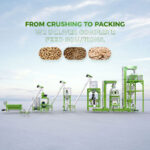
12. Integration into a Livestock Feed Production Line
All machines work together as part of a complete livestock feed production line.
Workflow:
- Raw material storage
- Conveying
- Grinding
- Mixing
- Conditioning
- Pelletizing (rabbit feed pellet mill)
- Cooling
- Screening
- Packaging
This integration ensures:
- Continuous production
- High efficiency
- Stable quality
- Reduced labor costs
13. Automation and Efficiency Improvements
Modern rabbit feed production systems are highly automated.
Automation provides:
- Reduced labor dependency
- Higher production speed
- Consistent feed quality
- Real-time monitoring
The rabbit feed pellet mill often includes automatic lubrication and control systems to improve reliability.
14. Energy Efficiency Considerations
Energy consumption is a major cost factor.
Modern machines improve efficiency through:
- High-efficiency motors
- Optimized transmission systems
- Smart temperature control
- Reduced friction components
This reduces long-term production costs.
15. Maintenance Requirements
Proper maintenance ensures long-term stability:
- Cleaning pellet dies regularly
- Lubricating moving parts
- Checking hammer mill blades
- Inspecting mixers and conveyors
- Monitoring electrical systems
Well-maintained machines extend production lifespan and reduce downtime.
16. Applications of Rabbit Feed Production Machines
These machines are used in:
- Commercial rabbit farms
- Feed manufacturing plants
- Agricultural cooperatives
- Export-oriented feed factories
They can also be adapted for other livestock feeds such as poultry and pig feed.
17. Future Development of Rabbit Feed Machinery
Future trends include:
- Fully intelligent production lines
- AI-based feed formulation
- Remote machine monitoring
- Energy-saving designs
- High-precision pellet mills
The rabbit feed pellet mill will continue to evolve with improved performance and automation.
https://pelletisingmachine.com/animal-feed-machine
Conclusion
Rabbit feed production requires a complete set of specialized machines working together in a coordinated system. From raw material handling to final packaging, each machine plays a critical role in ensuring efficiency, consistency, and feed quality.
At the center of this system is the rabbit feed pellet machine, which transforms mixed feed ingredients into durable and nutritious pellets essential for rabbit health and growth.
When integrated into a full livestock feed production line, these machines form a highly efficient, scalable, and profitable system capable of meeting the growing global demand for rabbit feed.