




Producing balanced pig feed is more complicated than simply grinding several ingredients and pressing them into pellets. A commercial feed facility needs to manage raw materials, formulation accuracy, particle size, mixing uniformity, pellet quality, storage, and production efficiency at the same time.
For a new project, one of the first questions is often how large the facility should be. However, capacity should not be considered separately from the feed formula or the number of animals being served. A farm producing feed for its own pigs may have completely different requirements from a commercial manufacturer supplying multiple farms.
This article looks at the main questions that arise when planning a modern feed-processing facility, with particular attention to raw-material preparation, process design, capacity selection, equipment configuration, and practical plant layout.
What Is a Pig Feed Plant Designed to Do?
A pig feed plant is essentially a coordinated system for converting agricultural ingredients into nutritionally consistent feed.
Depending on the scale of the project, the facility may include raw-material receiving, cleaning, crushing, batching, mixing, pelleting, cooling, screening, conveying, storage, and packaging.
Not every operation requires all of these processes. A small farm may use a simple grinding and mixing system, while a commercial facility may require automated batching and several storage silos.
The purpose of the processing line is not simply to make pellets. It is to make sure that ingredients are processed consistently and that the final feed meets the intended physical and nutritional specifications.
This distinction is important because equipment should be selected according to the production process rather than purchased as a collection of individual machines.
Which Raw Materials Are Commonly Used?
Pig feed formulations can contain a wide range of ingredients.
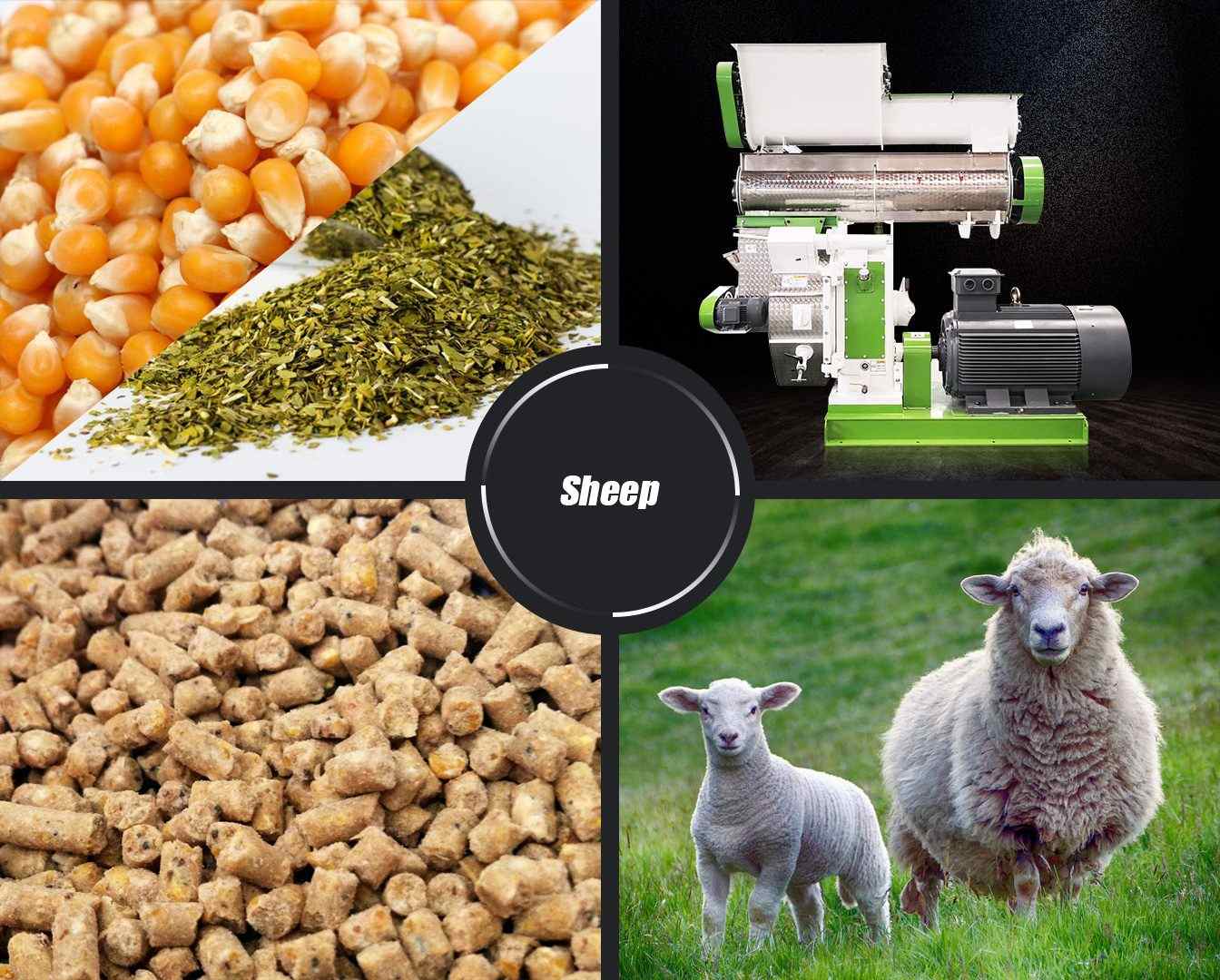
Corn is widely used as an energy source, while wheat, barley, rice bran, and other grains or by-products may also be included depending on regional availability and feed formulation.
Protein sources can include soybean meal, rapeseed meal, fish meal, and other suitable materials. Mineral premixes, vitamins, amino acids, and other additives may be included in relatively small quantities.
The exact formula depends on the age and production stage of the pigs.
Piglets have different nutritional requirements from growing pigs, while finishing pigs require another balance of energy, protein, minerals, and other nutrients.
Consequently, the processing system should be flexible enough to accommodate the formulations that the facility is expected to produce.
Does Pig Feed Need to Be Pelleted?
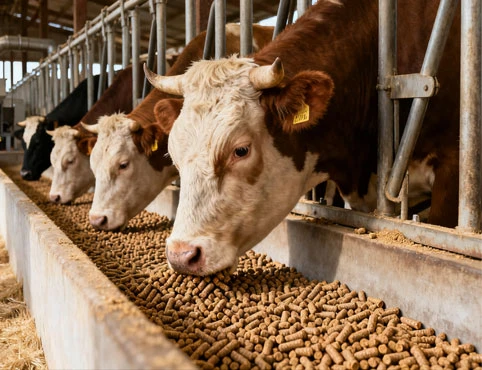
Pelleting is not the only possible form of pig feed, but it is widely used in commercial production.
Pellets are easier to handle mechanically and can provide a relatively uniform physical product. The pelleting process can also reduce segregation that may occur when different ingredients are handled as a loose mixture.
However, producing pellets introduces additional processing requirements.
The feed mixture needs to reach suitable physical conditions before compression. Depending on the formulation and equipment, conditioning may be used to improve pellet formation.
The finished pellets then need to be cooled and, when necessary, screened before storage or packaging.
Therefore, a pellet production system should be viewed as a sequence of connected processes rather than as a single pellet machine.
How Does the Pellet Mill Work?
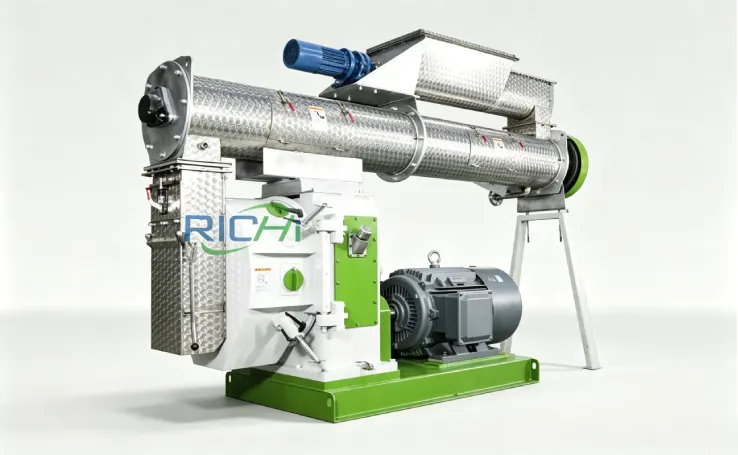
A pellet mill compresses prepared feed material through a die to form pellets of a defined diameter.
The feed enters the conditioning or feeding section and is gradually compressed inside the pelletizing chamber. Rollers press the material against the die, where it is forced through holes and cut into pellets.
Die diameter and compression characteristics influence the final pellet shape and density.
The machine must also be matched to the raw material. Different formulations can behave differently during compression because of differences in fiber, starch, moisture, fat, and other physical characteristics.
This is one reason why nominal machine capacity should not be interpreted as a universal output figure for every formula.
What Pellet Size Is Suitable for Pigs?
Pellet size can vary according to the age and feeding stage of the pigs.
Young animals generally require smaller feed particles or pellets, while larger pigs can consume larger pellets.
The appropriate size should also take into account feeding equipment and farm management practices.
If a commercial feed factory produces several types of pig feed, it may need different dies or a production arrangement that allows multiple pellet specifications.
Changing pellet size may affect production efficiency, so it is useful to consider the expected product range during the planning stage.
How Important Is Mixing Uniformity?
Mixing is one of the most important steps in feed manufacturing.
A good mixer should distribute major ingredients and small-dose components throughout the batch as evenly as practical.
This is particularly important when vitamins, minerals, amino acids, medications where legally applicable, or other micro-ingredients are included at low inclusion rates.
Poor mixing can result in nutritional variation between portions of the same batch.
Mixer selection depends on batch size, feed characteristics, production capacity, and required mixing time.
Horizontal mixers are commonly used in commercial feed processing, although other designs may also be suitable depending on the project.
Do Pig Feed Mills Need Liquid Addition Systems?
Not every feed formula requires a liquid addition system.
Some formulations may include ingredients such as vegetable oil or molasses. In such cases, controlled liquid dosing can help distribute these ingredients more consistently.
The amount of liquid and its physical characteristics influence the choice of pumps, pipelines, nozzles, and spraying systems.
Liquid addition should therefore be designed according to the actual formula.
Installing equipment that will rarely be used may unnecessarily increase complexity and maintenance requirements. Conversely, if liquid ingredients are an important part of the production process, manual addition may create consistency problems at larger production volumes.
This is another example of why process design should begin with the feed formulation.
How Should Production Capacity Be Determined?
Capacity planning should start with actual feed demand.
Suppose a farm consumes 8 tons of feed per day. If production is planned for four hours daily, the average required throughput is approximately 2 tons per hour. If the facility operates eight hours per day, the required average throughput is lower.
However, these simple calculations do not account for startup time, cleaning, formula changes, maintenance, or temporary interruptions.
A practical production line therefore needs some operating margin.
Commercial feed producers should also consider future demand. If the business expects to add customers or increase animal numbers, designing a system with no room for expansion may create difficulties later.
At the same time, excessive capacity can lead to unnecessary investment and underutilized equipment.
The goal is to establish a capacity that fits the current production plan while leaving a reasonable path for future development.
When Does a 20-Ton-Per-Hour Line Make Sense?
Large commercial facilities may require significantly higher throughput than individual farms.
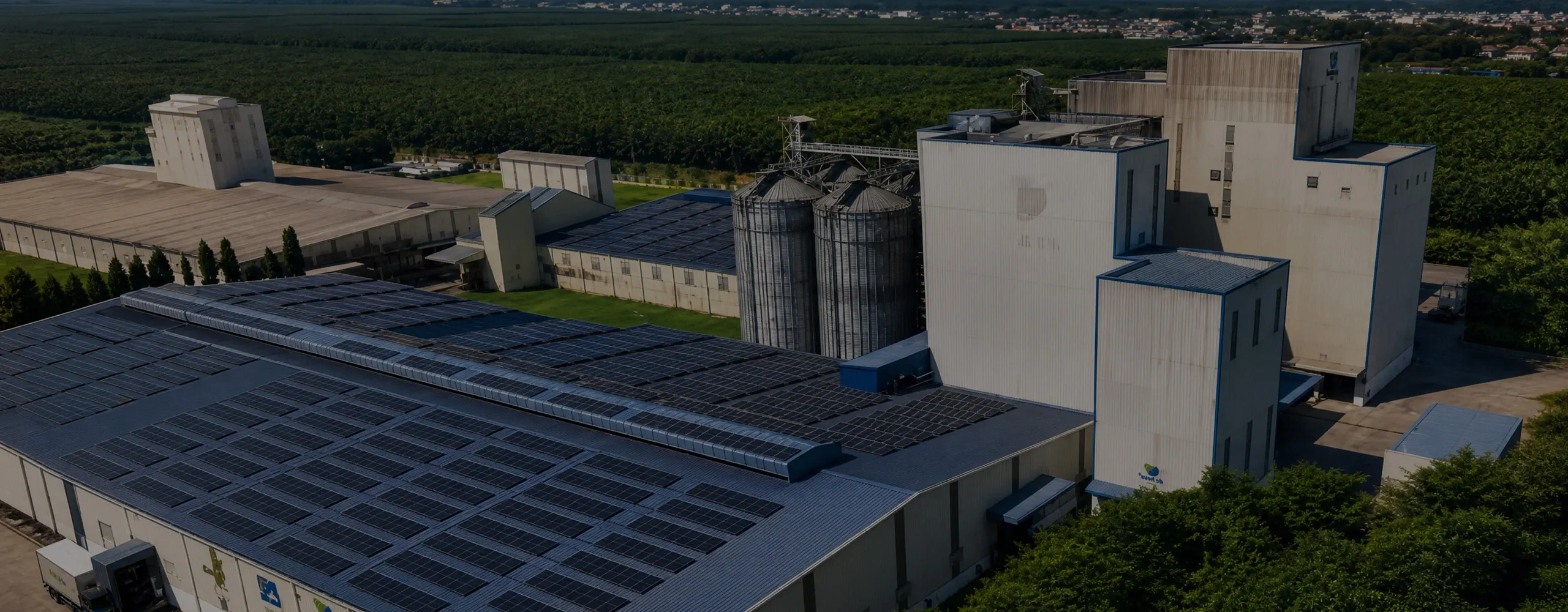
A project marketed as a 20-25 t/h livestock feed mill for sale is generally intended for a scale of operation where feed is produced continuously for a substantial customer base or livestock population.
At this capacity level, the production system is no longer just a pellet mill. Material receiving, storage, grinding, batching, mixing, pelleting, cooling, screening, and conveying all need to be coordinated.
The supporting infrastructure becomes increasingly important.
For example, insufficient raw-material storage can interrupt production even when the processing machines themselves have sufficient capacity. Similarly, an undersized cooler can become a bottleneck after the pellet mill.
Therefore, high-capacity projects require system-level planning rather than simply selecting a larger pellet mill.
Should a Small Farm Build a Complete Line?
Not necessarily.
For a small farm, a complete automated plant may exceed the actual production requirement.
A smaller system can sometimes be built around the most important processes, such as grinding, mixing, and pelletizing. Manual handling may remain practical when production volume is limited.
However, the decision depends on labor availability, feed consumption, raw-material conditions, and future growth.
If the farm plans to supply feed to nearby farms or expand its livestock operation, a more integrated system may eventually become appropriate.
The key is to compare the additional equipment investment with the actual production benefit.
What Equipment Is Usually Included in a Commercial Line?
A medium or large feed facility may contain the following main sections:
Raw-material receiving:
Used to unload and transfer incoming ingredients.
Cleaning:
Removes foreign materials before processing.
Grinding:
Reduces grain and other suitable ingredients to the required particle size.
Batching:
Measures ingredients according to the feed formula.
Mixing:
Combines ingredients into a uniform feed mixture.
Pelleting:
Compresses the prepared mixture into pellets.
Cooling:
Reduces pellet temperature and stabilizes the product after pelleting.
Screening:
Separates fines and particles outside the desired size range.
Packing or bulk storage:
Prepares the finished product for transportation or farm use.
The exact configuration depends on production capacity and product range.
How Should a Feed Factory Be Laid Out?
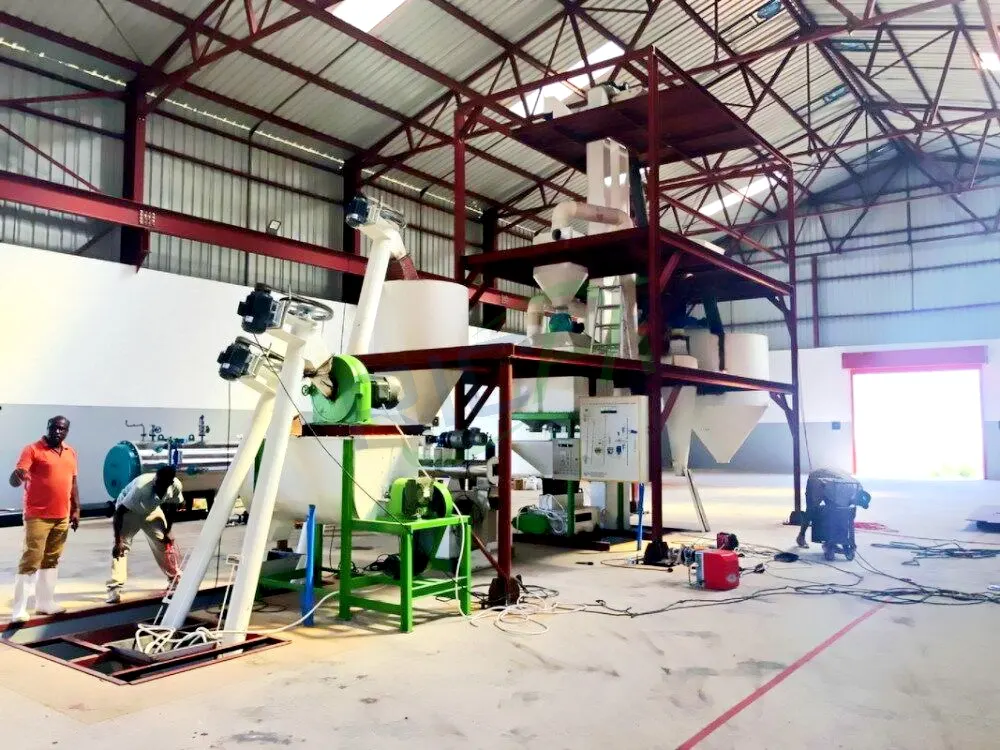
A good layout should follow the direction of material flow.
Raw materials should enter the facility at a location that allows efficient unloading and storage. From there, materials move through cleaning and processing stages before reaching finished-product storage.
In a vertical layout, gravity can help move materials between certain stages. This can reduce some conveying requirements.
A horizontal layout may be easier to construct in existing buildings and can provide straightforward access to individual machines.
The available land, building height, truck movement, storage capacity, electrical infrastructure, and environmental requirements should all be considered.
Maintenance access is also important.
Machines should not be installed so closely together that routine inspection becomes difficult. Space should be reserved for replacing wear parts, servicing motors, cleaning equipment, and handling maintenance activities safely.
What Role Does Automation Play?
Automation becomes increasingly valuable as production capacity increases.
A small operation may manually weigh several ingredients, but this becomes difficult when dozens of ingredients and multiple formulas are involved.
Automatic batching systems can improve weighing consistency and reduce repetitive labor.
Centralized control systems can also allow operators to monitor equipment status, production sequences, and certain operating parameters from one location.
However, automation should be proportional to the scale of the project.
A highly automated system involves additional investment in sensors, control cabinets, software, wiring, and maintenance. Operators also need appropriate training.
The objective should be to automate processes where it provides a meaningful operational benefit.
What Determines the Overall Project Cost?
The total investment depends on more than the main processing machines.
Important cost categories include:
- Main production equipment
- Raw-material storage
- Conveying systems
- Electrical and control systems
- Dust collection
- Workshop construction or modification
- Installation and commissioning
- Packaging equipment
- Laboratory or quality-control equipment
- Spare parts and maintenance supplies
For a small facility, the processing machines may represent a large proportion of total investment.
For a larger factory, however, infrastructure, storage, conveying, electrical systems, and construction can become equally significant.
This is why comparing individual machine prices without comparing the complete project scope can produce misleading conclusions.
What Should Be Checked Before Buying Equipment?
Before making a final equipment decision, several technical questions should be answered.
First, what raw materials will be used?
Second, what feed formulas will be produced?
Third, how many tons of feed are required per day?
Fourth, what pellet diameters are required?
Fifth, how many operating hours are available?
Sixth, what level of automation is appropriate?
Seventh, how much space is available for the production line and storage?
Finally, what are the local requirements for electricity, environmental protection, construction, and transportation?
These questions help turn a general idea into a specific process design.
How Should Different Equipment Proposals Be Compared?
When several suppliers provide quotations, it is useful to compare them based on technical scope rather than price alone.
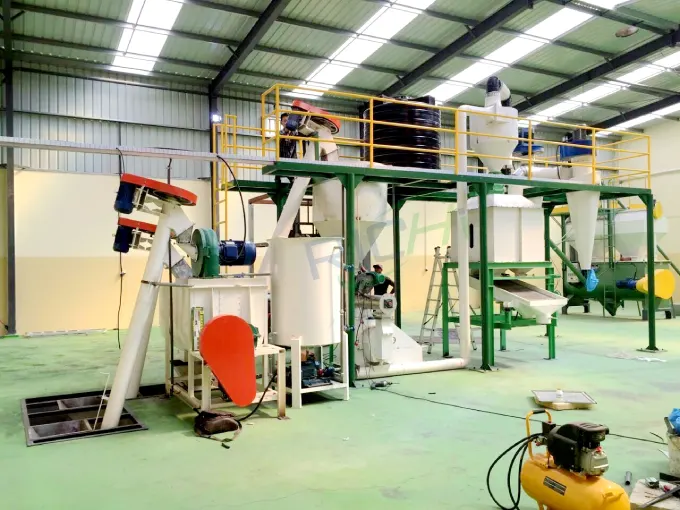
One proposal may include a grinder, mixer, cooler, screener, conveyors, and automatic packing, while another may only include the pelletizing section.
The difference can make two apparently similar quotations difficult to compare.
A technical comparison should therefore identify the capacity of each major machine, motor configuration, material flow, control method, auxiliary systems, installation scope, and expected production conditions.
It is also useful to examine whether the proposed line can accommodate the intended formulas and pellet sizes.
For general technical references, process descriptions, and equipment information, readers may best site materials that explain the complete production process rather than relying only on short product descriptions.
The objective is to understand the relationship between individual machines and the overall production system.
What About Future Expansion?
A feed factory should ideally be designed with future development in mind.
Expansion can take different forms. The facility may need to increase production capacity, add new feed formulas, introduce additional pellet sizes, improve automation, or expand storage.
Planning for expansion does not necessarily mean purchasing oversized equipment from the beginning.
Instead, it may involve reserving floor space, designing suitable electrical infrastructure, leaving room for additional storage, or choosing a layout that allows another processing line to be installed later.
This can make future investment easier without placing unnecessary financial pressure on the initial project.
Why Is Process Balance More Important Than Individual Machine Size?
A production line works as a system.
If the grinder can process 25 tons per hour but the mixer can only handle 15 tons per hour, the plant cannot realistically maintain 25 tons per hour.
The same applies to cooling, screening, conveying, batching, and storage.
This principle is especially important in high-capacity projects. Increasing the size of one machine does not automatically increase total production.
The capacity of each connected stage should be coordinated.
A balanced system may therefore perform better in practice than a system containing several oversized machines.
What Does a Practical Project Evaluation Look Like?
Imagine a farm cooperative plans to produce 30 tons of pig feed per day.
Rather than immediately selecting a large pellet mill, the cooperative could first determine how many hours it wants to operate, which formulas it will produce, what raw materials are locally available, and how much finished feed needs to be stored.
If production is scheduled for six hours per day, the average required throughput is around 5 tons per hour before allowing for downtime and process interruptions.
The project team could then determine the appropriate grinding, batching, mixing, pelletizing, cooling, screening, and conveying capacities.
This step-by-step approach provides a much more realistic basis for equipment selection than starting with a machine catalogue.
Final Thoughts: What Makes a Feed Plant Practical?
A well-designed pig feed facility is not defined simply by its largest machine or its highest advertised capacity.
The important factors are whether the raw materials can be processed efficiently, whether formulas can be produced consistently, whether the equipment capacities are properly matched, and whether the layout supports safe and convenient operation.
For smaller farms, a relatively simple system may be sufficient. For commercial producers, automated batching, multiple storage systems, efficient material handling, cooling, screening, and quality control become increasingly important.
When evaluating equipment suppliers, technical communication is particularly valuable. A manufacturer should be able to discuss the relationship between raw materials, formulas, capacity, pellet specifications, and equipment configuration.
For example, pelleting machine can be considered as one source of technical information when researching different feed-processing configurations.
Ultimately, the best project is not necessarily the largest or the most automated. It is the one whose production capacity, equipment configuration, raw-material handling, investment level, and future expansion plans are consistent with the actual needs of the operation.