



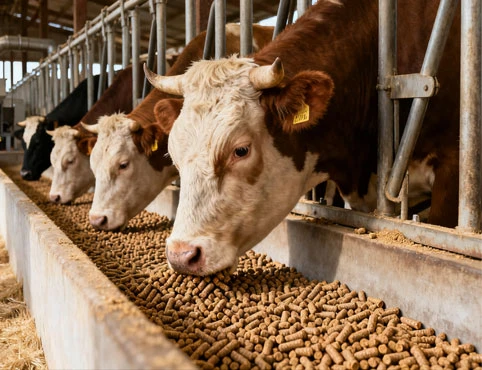
Modern cattle feed production is no longer based on a single feed processing machine. Commercial feed manufacturers need a complete combination of equipment to handle raw materials, prepare formulas, process ingredients, produce uniform pellets, cool and screen finished feed, and package the final product.
The equipment used in a cattle feed production line directly influences production capacity, feed quality, energy consumption, labor requirements, and operating costs. A well-designed system should ensure that each machine works together rather than treating every processing stage as an independent operation.
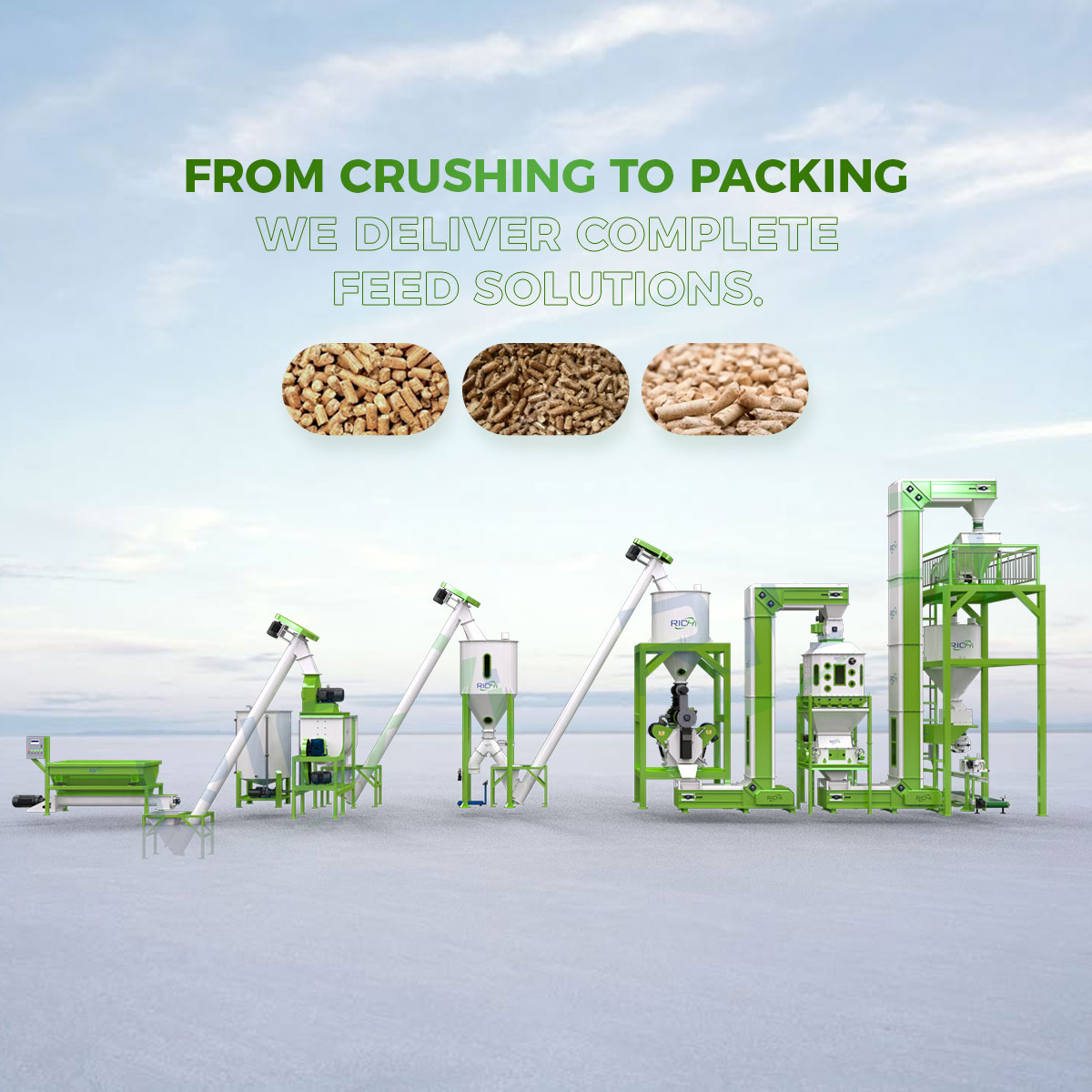
Depending on the formula and production requirements, a modern cattle feed plant may include raw material receiving equipment, cleaning machines, crushers, grinders, batching systems, mixers, conditioners, pellet mills, coolers, screens, conveyors, packing machines, and centralized control systems.
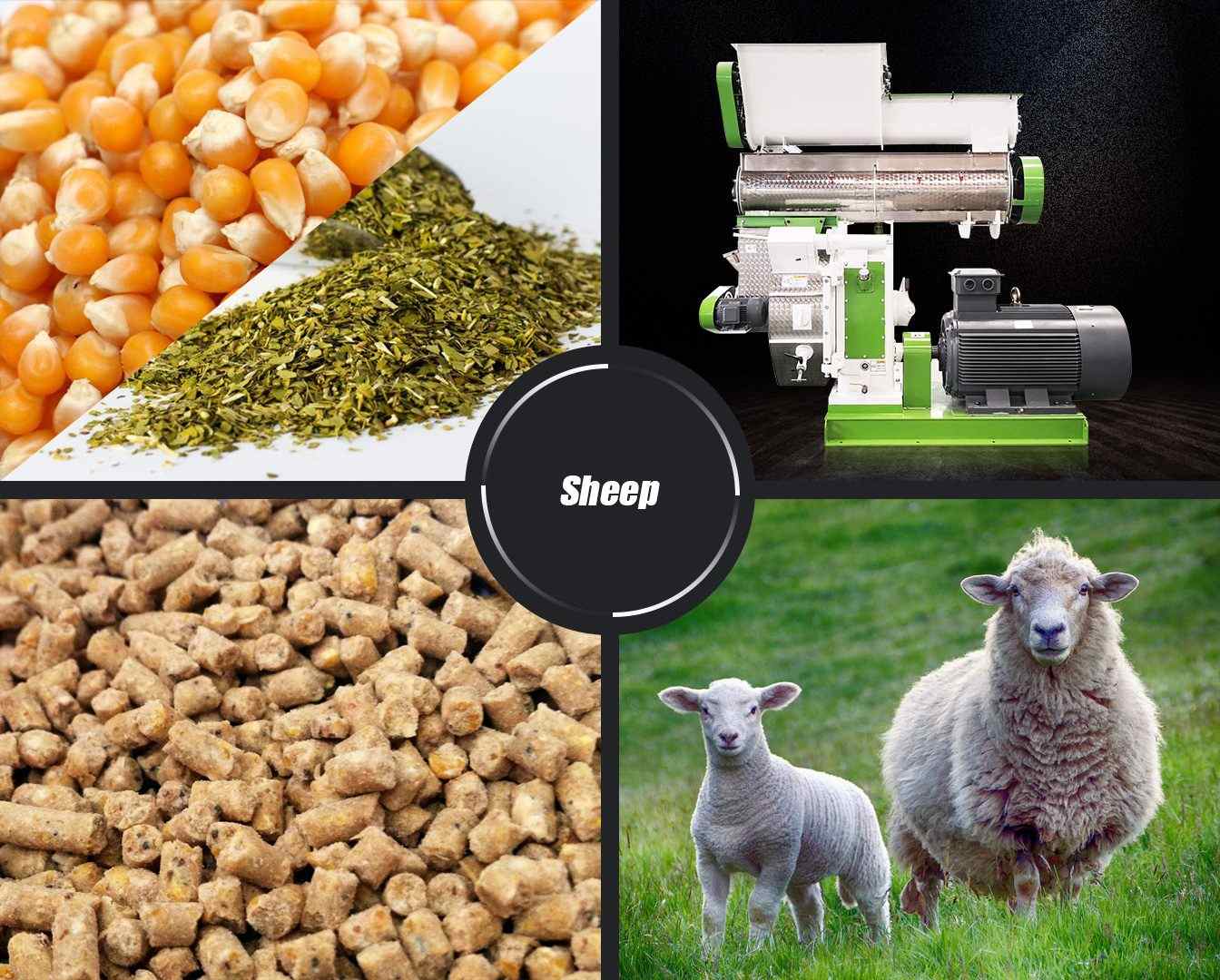
Among these machines, the cattle feed pellet mill is one of the core pieces of equipment because it converts prepared feed mixtures into compact pellets with a controlled diameter and density. However, pelletizing performance also depends heavily on the equipment installed before and after the pellet mill.
Understanding the role of each machine can help investors design a more efficient cattle feed production system.
1. Why a Complete Equipment System Is Important
Cattle feed formulas can contain many different ingredients, including grains, protein meals, bran, forage, minerals, vitamins, molasses, and agricultural by-products.
These materials can differ considerably in:
- Particle size
- Moisture content
- Fiber content
- Density
- Hardness
- Flowability
- Nutritional composition
A single machine cannot efficiently handle all these requirements.
For example, a pellet mill cannot compensate for poorly ground raw materials. Similarly, a high-quality mixer cannot solve a problem caused by inaccurate batching.
A modern production line therefore follows a coordinated process such as:
Raw Material Receiving → Cleaning → Grinding → Batching → Mixing → Conditioning → Pelletizing → Cooling → Screening → Packaging
Additional equipment can be added depending on the formula, capacity, automation level, and factory layout.
2. Raw Material Receiving Equipment
The first stage of commercial cattle feed production is receiving raw materials.
Raw materials may arrive in bags, bulk trucks, containers, or other transport systems.
Receiving equipment can include:
- Intake hoppers
- Receiving pits
- Bucket elevators
- Screw conveyors
- Belt conveyors
- Pneumatic conveying systems
- Magnetic separators
The receiving system should be designed according to the physical properties and delivery method of the raw materials.
For a large feed plant, efficient receiving is important because delays at the beginning of the process can affect the entire production line.
Proper receiving equipment also helps reduce manual handling and improves material flow.
3. Raw Material Cleaning Equipment
Before grinding and processing, raw materials should be cleaned to remove unwanted materials.
Common contaminants may include:
- Stones
- Metal particles
- Soil
- Fibers
- Plastic
- Large foreign objects
Common cleaning equipment includes:
Vibrating Cleaning Screen
A vibrating screen separates particles according to size and can remove oversized impurities.
Magnetic Separator
Magnetic equipment helps remove ferrous metal particles that could damage downstream machinery.
Pre-Cleaner
A pre-cleaning system can remove larger impurities before materials enter storage or processing equipment.
Cleaning is especially important because foreign objects can damage grinders, mixers, and the cattle feed pellet mill.
An effective cleaning stage also helps protect equipment and improve final feed quality.
4. Feed Hammer Mill
Grinding is a major part of cattle feed production technology.
Many grains and other ingredients need to be reduced to a suitable particle size before mixing and pelletizing.
A hammer mill is commonly used to grind:
- Corn
- Barley
- Wheat
- Sorghum
- Bran
- Oilseed meals
- Some dried forage materials
The grinding process affects both feed quality and pelletizing efficiency.
If particles are too large, mixing and pellet formation may become less consistent.
If materials are ground excessively fine, energy consumption can increase and the final feed may generate more dust.
Therefore, the correct grinding particle size should be determined according to the feed formula and intended pellet specifications.
5. Fine Grinding Equipment for Special Formulas
Some cattle feed formulas may require finer grinding than standard grain-based feeds.
Fine grinding equipment can be used when smaller particle sizes are needed to improve mixing or pellet formation.
The appropriate grinder depends on:
- Raw material hardness
- Desired particle size
- Production capacity
- Moisture
- Fiber content
- Energy requirements
For high-fiber cattle feed, grinding technology can be particularly important because long fibers can influence material flow through the production line.
The grinding system should therefore be selected as part of the complete process rather than independently.
6. Batching and Weighing System
Accurate batching is essential for modern cattle feed production.
A cattle feed formula may contain several major ingredients and small quantities of additives.
A typical batching system includes:
- Storage bins
- Weighing hoppers
- Load cells
- Automatic feeders
- Control software
- Discharge gates
The system measures each ingredient according to the programmed formula.
Accurate batching helps ensure that every production batch contains the intended proportions of nutrients.
This is especially important when the formula includes expensive ingredients such as soybean meal, minerals, vitamins, additives, or other specialty components.
Automatic batching can also reduce manual weighing errors.
7. Feed Mixer
After ingredients are accurately weighed, they need to be mixed.
A mixer combines the ingredients into a relatively uniform mixture before pelletizing.
Common mixer designs include:
- Horizontal mixers
- Paddle mixers
- Ribbon mixers
- Twin-shaft mixers
The best mixer depends on the formula and production requirements.
A good mixer should provide:
- Uniform ingredient distribution
- Short mixing time
- Low residual material
- Reliable operation
- Compatibility with liquid ingredients
For cattle feed containing molasses or other liquid components, the mixer may need a liquid addition system.
8. Liquid Addition System
Many cattle feed formulas use liquid ingredients.
Molasses is one example. Oils, fats, or other liquid additives may also be included depending on the formula.
A liquid addition system can include:
- Storage tanks
- Pumps
- Pipelines
- Flow meters
- Spraying nozzles
- Automatic control valves
The purpose is to distribute liquid ingredients evenly rather than allowing them to concentrate in one part of the mixture.
Accurate liquid addition can improve formula consistency and reduce material losses.
It can also affect the performance of the downstream pellet mill.
9. Feed Conditioner
Conditioning is an important stage before pelletizing.
A conditioner uses controlled moisture and, in many cases, steam to prepare the feed mixture.
The conditioning process can help:
- Increase feed temperature
- Add controlled moisture
- Improve material flow
- Improve pellet formation
- Support pellet durability
- Reduce mechanical stress during pelletizing
Conditioning requirements depend on the feed formula.
High-fiber cattle feed may require different conditioning settings from a high-concentrate formula.
A well-designed conditioner should therefore be matched to the production capacity and feed characteristics.
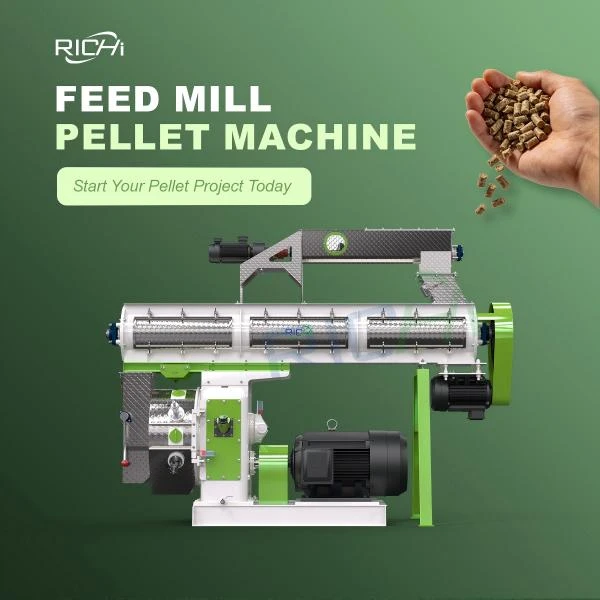
10. Cattle Feed Pellet Mill
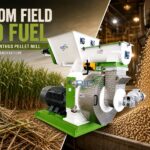
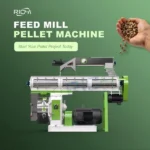
The cattle feed pellet mill is one of the central machines in a modern cattle feed production line.
After grinding, batching, mixing, and conditioning, the prepared feed enters the pellet mill.
The pellet mill compresses the feed material through holes in a die.
The resulting pellets can be produced in different diameters depending on the requirements of the cattle and the final feed product.
A cattle feed pellet mill typically consists of components such as:
- Feed inlet
- Conditioning or feeding system
- Die
- Rollers
- Main drive
- Gearbox or transmission
- Pellet cutting system
- Lubrication system
- Safety protection system
The die and rollers are particularly important because they determine how material is compressed.
(Learn more: https://richipelletizer.com/cattle-feed-pellet-mill-for-sale/)
11. Why Die Selection Matters
The die is one of the most important working components of a pellet mill.
Different cattle feed formulas may require different compression ratios.
Factors affecting die selection include:
- Raw material composition
- Fiber content
- Moisture
- Pellet diameter
- Feed density
- Required production rate
A high-fiber formula may require different compression characteristics from a grain-based concentrate feed.
Using an unsuitable die can lead to poor pellet quality, unstable production, excessive power consumption, or increased wear.
Therefore, die selection should be based on actual feed characteristics rather than simply choosing a standard die.
12. Pellet Roller System
The rollers work together with the die to compress feed material.
Roller condition has a direct influence on pelletizing performance.
Worn rollers can cause:
- Reduced capacity
- Uneven pellet formation
- Higher energy consumption
- Increased vibration
- More frequent maintenance
Regular inspection and adjustment of rollers can help maintain stable pellet production.
For commercial feed plants operating many hours per day, preventive maintenance of the roller and die system is an important part of production management.
13. Pellet Mill Drive System
The drive system provides the power required for pelletizing.
Depending on the machine design, the drive may include:
- Main motor
- Gearbox
- Coupling
- Transmission components
- Lubrication system
A reliable drive system helps the pellet mill operate continuously under demanding conditions.
The drive should be selected according to the target production capacity and feed characteristics.
An undersized drive may limit production, while excessive power can increase investment and operating costs.
14. Pellet Cooler
Fresh pellets are hot after leaving the pellet mill.
They also contain moisture that needs to be controlled before storage.
A pellet cooler reduces the temperature of the pellets and helps stabilize their moisture.
Cooling equipment may include:
- Counterflow coolers
- Cooling fans
- Air ducts
- Discharge mechanisms
- Temperature monitoring systems
Efficient cooling is essential because inadequately cooled pellets may deteriorate during storage.
A properly matched cooler also prevents the cooling stage from becoming a bottleneck after the pellet mill.
15. Vibrating Screen
After cooling, pellets are often screened.
The screening process separates:
- Finished pellets
- Fine particles
- Broken pellets
- Oversized particles
A vibrating screen helps ensure that the final product has a more consistent particle size.
Suitable fines may be returned to the production process depending on the plant design.
This reduces material waste and improves production yield.
Screening also improves the appearance and handling quality of packaged cattle feed.
16. Feed Crumbler for Smaller Feed Particles
Not every cattle feed product is sold as full-size pellets.
Young cattle may require smaller feed particles.
A crumbler can break larger pellets into smaller pieces.
The crumbler may be used for:
- Calf feed
- Starter feed
- Special livestock feed products
The final particle size depends on the feeding requirements.
This equipment can therefore increase product flexibility within a cattle feed plant.
17. Feed Conveyors
Conveying equipment connects different machines throughout the production line.
Common conveyor systems include:
Screw Conveyor
Suitable for moving powdered or granular materials over relatively short distances.
Belt Conveyor
Useful for moving finished feed and bulk materials.
Bucket Elevator
Commonly used for vertical transportation between different levels of a feed plant.
Drag Conveyor
Suitable for continuous bulk material handling.
The conveying system should be designed to minimize material spillage, unnecessary transfers, and production bottlenecks.
Poorly designed conveying systems can create hidden energy and maintenance costs.
18. Storage Bins and Silos
Raw materials and finished feed need suitable storage.
Depending on the production scale, storage may include:
- Steel silos
- Feed bins
- Ingredient hoppers
- Finished-product bins
- Additive bins
Storage equipment helps organize raw materials and maintain continuous production.
Different ingredients may require different storage conditions.
Moisture-sensitive materials should be protected from water and excessive humidity.
Proper storage reduces spoilage and improves inventory management.
19. Automatic Packing Machine
After processing, finished cattle feed may be packed into bags of different weights.
Automatic packing equipment can include:
- Weighing system
- Bag filling system
- Bag clamping mechanism
- Sewing or sealing system
- Conveyor
- Bag collection system
Automatic packing improves weighing accuracy and reduces repetitive manual work.
For large feed manufacturers, automated packaging can also increase production efficiency and improve finished-product handling.
20. Palletizing and Finished Feed Handling
Large-scale feed plants may use palletizing systems after packaging.
Palletizing equipment can arrange bags in stable stacks for:
- Warehouse storage
- Forklift handling
- Truck loading
- Export transportation
Automated finished-feed handling reduces manual labor and can improve workplace safety.
The appropriate palletizing system depends on bag size, production capacity, warehouse layout, and distribution requirements.
21. Dust Collection System
Feed production can generate dust during:
- Raw material receiving
- Grinding
- Mixing
- Conveying
- Screening
- Packaging
Dust collection equipment helps control airborne particles and maintain a cleaner production environment.
A typical system may include:
- Dust hoods
- Ductwork
- Cyclones
- Bag filters
- Fans
Dust collection should be integrated into the factory layout rather than added as an afterthought.
22. Electrical Control System
Modern cattle feed production lines increasingly use centralized control systems.
The control system can coordinate:
- Feeders
- Grinders
- Batching
- Mixing
- Conditioning
- Pelletizing
- Cooling
- Screening
- Packaging
- Conveyors
Operators can monitor equipment status, production parameters, alarms, and process sequences from a centralized interface.
Automation can reduce manual intervention and improve process consistency.
23. Sensors and Monitoring Equipment
Sensors provide important information for modern feed production.
Depending on the plant, sensors may monitor:
- Temperature
- Moisture
- Motor load
- Material level
- Weight
- Pressure
- Equipment status
For example, temperature monitoring can help operators evaluate the cooling process.
Load monitoring can provide information about the operating condition of grinding or pelletizing equipment.
Data collected from these sensors can support preventive maintenance and production optimization.
24. Equipment for High-Fiber Cattle Feed
High-fiber cattle feed can present special processing challenges.
Ingredients such as:
- Alfalfa
- Grass hay
- Straw
- Corn stalks
- Other forage materials
may require additional preparation before pelletizing.
The equipment configuration may include:
Bale Breaker → Forage Cutter → Crusher/Grinder → Screening → Mixing → Conditioning → Pellet Mill → Cooling → Screening → Packing
The exact process depends on the raw material and final formula.
The pellet mill should have sufficient compression capability and an appropriate die configuration for the intended feed.
25. Equipment for TMR-Based Feed
Total Mixed Ration, commonly called TMR, combines forage, grains, protein sources, minerals, and other ingredients into a balanced ration.
Traditional TMR is commonly prepared and distributed as a mixed ration.
In some commercial applications, TMR-type formulas may also be processed into pellets.
The production system may require:
- Forage processing equipment
- Crushers
- Batching system
- Mixer
- Liquid addition
- Conditioner
- Pellet mill
- Cooler
- Screen
The exact equipment configuration depends on whether the final product is loose TMR, compacted feed, or pelleted feed.
26. Equipment Selection for Different Production Capacities
The equipment required depends heavily on production capacity.
A small cattle feed plant may use a relatively simple configuration with manual or semi-automatic batching.
A medium-sized plant may include automatic batching, grinding, mixing, pelletizing, cooling, screening, and packaging.
A large commercial plant may use:
- Multiple raw material intake systems
- Large storage silos
- Automatic batching
- Multiple grinders
- Large mixers
- Steam conditioning
- Multiple pellet mills
- Automated cooling
- Screening
- Packaging
- Palletizing
- Centralized automation
The capacity of every machine should be properly matched.
For example, a high-capacity cattle feed pellet mill should not be connected to an undersized cooler or mixer.
27. How Equipment Matching Improves Production Efficiency
A feed production line operates as a system.
The actual output is often determined by the slowest major process.
For example:
If the grinder processes 12 tons per hour, the mixer processes 10 tons per hour, the pellet mill produces 12 tons per hour, but the cooler handles only 8 tons per hour, the overall production capacity will be restricted by the cooling stage.
This is why professional production-line design is important.
Equipment capacity should be considered together rather than selected individually.
28. Maintenance Equipment and Spare Parts
Maintenance equipment is another essential part of a modern feed plant.
A production facility should maintain appropriate spare parts for critical components such as:
- Pellet mill dies
- Rollers
- Bearings
- Screens
- Hammers
- Belts
- Motors
- Sensors
- Seals
- Lubrication components
Regular inspection can identify wear before it causes major downtime.
For a cattle feed pellet mill, routine inspection of dies, rollers, bearings, lubrication, and drive components is particularly important.
29. Why Turnkey Equipment Design Matters
Buying individual machines from different suppliers can create compatibility problems.
A turnkey engineering approach allows the production line to be designed as one integrated system.
A complete cattle feed project may include:
- Production process design
- Equipment selection
- Factory layout
- Equipment manufacturing
- Electrical control
- Transportation
- Installation
- Commissioning
- Operator training
- After-sales support
This approach helps ensure that equipment capacities, material flow, electrical systems, and control systems work together.
30. RICHI Cattle Feed Production Equipment
RICHI Pelletizer can provide complete cattle feed production solutions according to raw materials, feed formulas, production capacity, pellet diameter, automation requirements, and factory conditions.
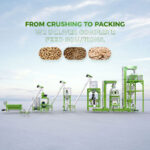
A typical cattle feed line can integrate raw material cleaning, grinding, batching, mixing, conditioning, a cattle feed pellet mill, cooling, screening, conveying, and packaging equipment.
For customers producing high-fiber feed, concentrate feed, or certain TMR-based formulas, the process can be customized according to the characteristics of the raw materials.
The goal is not simply to supply individual machines but to develop a coordinated production system.
31. How to Choose Cattle Feed Production Equipment
Before purchasing equipment, manufacturers should evaluate several factors.
Raw Materials
Identify all major ingredients and their moisture, hardness, fiber content, and particle size.
Formula
Different formulas require different processing technologies.
Capacity
Determine the required hourly output and potential future expansion.
Pellet Diameter
Define the target pellet size according to the intended cattle and product type.
Automation
Decide whether the plant should use manual, semi-automatic, or fully automated control.
Factory Layout
Consider building height, available floor space, material flow, and storage capacity.
Energy
Evaluate electricity and steam requirements.
Maintenance
Consider spare parts, wear components, lubrication, and technical support.
Future Expansion
Design the plant with potential capacity increases in mind.
Conclusion
Modern cattle feed production technology depends on a complete equipment system rather than a single machine. Raw material receiving and cleaning equipment prepare ingredients, grinders establish suitable particle sizes, batching systems ensure formula accuracy, and mixers provide uniform distribution.
Conditioners prepare the feed before pelletizing, while the cattle feed pellet mill compresses the prepared mixture into uniform pellets. Coolers stabilize fresh pellets, screens remove fines and unwanted particles, and packaging equipment prepares the finished product for storage and distribution.
Conveyors, elevators, storage bins, dust collection systems, sensors, electrical controls, and automation equipment support the entire production process.
The most effective cattle feed production line is one in which all machines are properly matched according to raw materials, feed formula, production capacity, pellet size, factory conditions, and automation requirements.
For businesses planning a new feed mill or upgrading an existing facility, a complete process-based equipment design can help improve production efficiency, maintain consistent feed quality, reduce material losses, and create a more reliable long-term manufacturing system.