




The idea of converting poultry manure into fertilizer sounds straightforward: collect the manure, process it, pelletize it, and sell the finished product. In reality, the commercial success of a poultry manure project depends on a much wider set of decisions.
Raw-material availability, local fertilizer demand, moisture management, production capacity, transportation distance, product formulation, and packaging can all influence the business model.
For that reason, a successful poultry manure project starts with project planning rather than machinery selection.
The Business Begins with Raw-Material Security
A fertilizer plant needs a stable supply of feedstock.
For poultry manure processing, this usually means knowing where the manure will come from, how frequently it will be collected, and what physical conditions it will have when delivered to the plant.
A nearby poultry operation may provide relatively stable material flow. A centralized fertilizer company may instead source manure from several farms.
The second model provides access to a larger quantity of raw material, but it introduces additional logistics considerations.
Transportation matters because low-density wet manure can be expensive to move. As a result, the distance between poultry farms and the processing plant can have a significant effect on project economics.
A practical plant location often balances manure supply, electricity, labor, water, transportation, and access to fertilizer markets.
Why Production Capacity Should Follow Material Availability
Large equipment is not automatically better for every project.
A production line should be designed around the amount of usable raw material that can realistically enter the factory.
Suppose a region has a reliable supply of manure but only a modest local fertilizer market. A smaller plant may provide more flexibility than a high-capacity factory that must continually search for additional buyers.
On the other hand, a fertilizer manufacturer already serving a broad agricultural region may require a much larger continuous operation.
Capacity planning should therefore combine raw-material supply with sales potential.
Projects comparing a 1-4 T/H organic fertilizer pellet plant for sale can use capacity as a starting reference, but the final equipment configuration should still be matched to the moisture, formulation, and operating schedule of the specific business.
What Does a Modern Poultry Manure Process Look Like?
The production route varies from project to project, but a typical system may include:
Raw-material collection
Pretreatment or composting
Drying
Crushing
Mixing
Granulation
Cooling
Screening
Packaging
Not every plant requires every machine. Some manure arrives partially dried, while some projects combine several organic raw materials and need more advanced mixing and dosing.
This flexibility is important because fertilizer manufacturers often want to develop more than one product.
Composting and Stabilization
Fresh poultry manure has physical and biological characteristics that make direct processing difficult in many situations.
A stabilization stage can help prepare the material for fertilizer production.
The exact treatment method depends on the project, local regulations, feedstock condition, and target product.
During the planning process, operators should consider whether manure arrives fresh, partially composted, or already stabilized.
That decision affects the downstream drying requirements and layout of the production facility.
Moisture Control Shapes the Entire System
Moisture is one of the most important variables in manure pellet production.
Wet material can increase the workload of the dryer and affect granulation behavior.
Dry material may be easier to process, but excessive drying can also affect pellet formation and increase energy consumption.
The ideal operating condition is therefore not simply “as dry as possible.”
Instead, the goal is to reach a condition that works for the specific granulation process and formulation.
This is why commercial plants often use moisture testing and controlled conditioning rather than relying on visual judgment.
From Powder to Granules
After pretreatment and moisture adjustment, the material must be reduced to a suitable particle size and mixed uniformly.
The crusher helps break down large clumps and improve feed consistency.
The mixer becomes essential when several ingredients are included in the fertilizer recipe.
Only after these preparation stages does the granulation section become the focus.
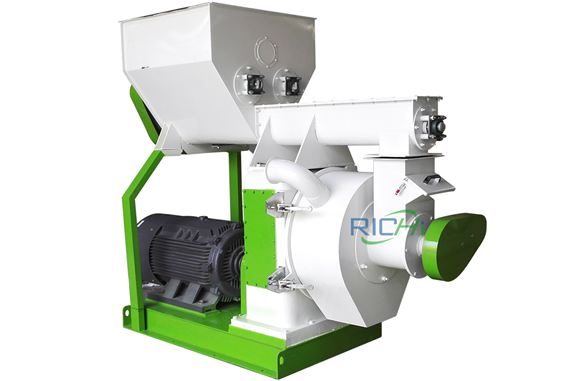
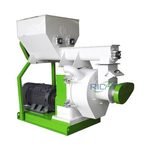
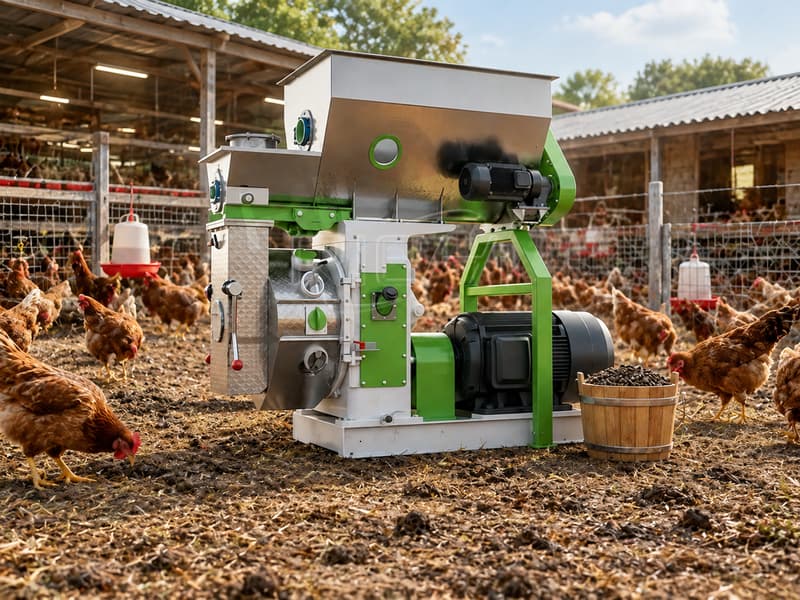
A chicken manure pelletizer compresses the prepared mixture into consistent fertilizer granules.
The final size is normally selected according to the intended product and application method.
Agricultural customers may value granules that are easy to handle with existing spreading equipment, while retail customers may prioritize uniform appearance and packaging convenience.
Why the Granulator Should Not Be Evaluated Alone
It is tempting to compare equipment based on output capacity and purchase price.
However, a granulator with a low purchase price may not necessarily produce the lowest total production cost.
A commercial buyer should also consider:
Feed consistency
Energy demand
Maintenance requirements
Spare parts access
Granule consistency
Integration with drying and cooling
Operator workload
Potential for automatic control
The correct equipment is therefore the one that fits the complete operating system, not merely the machine with the lowest initial price.
(Related Post:https://www.richipelletmill.com/organic-fertilizer-pellet-machine/)
Where Does the Finished Fertilizer Go?
A poultry manure fertilizer producer needs a realistic sales channel before investing in equipment.
Possible customers include farms, fertilizer distributors, agricultural cooperatives, landscaping suppliers, and organic farming businesses, depending on local market regulations and product positioning.
The product may be sold in bulk or in bags.
Bulk products can be attractive for large agricultural customers because packaging costs are lower.
Bagged products may be easier to market through retail distribution.
Packaging therefore needs to be considered during the early planning stage rather than added at the end.
A Granule Is a Product, Not Just a Shape
The finished fertilizer should be evaluated according to how the customer intends to use it.
For example, farmers may care about ease of spreading and storage.
Distributors may care about packaging durability and consistency between batches.
Retail buyers may care about particle appearance and clean handling.
These requirements influence decisions throughout the production line.
The fertilizer formulation also matters. Poultry manure can be processed as a core raw material, but some projects combine it with other organic materials to create different product characteristics.
How Can Automation Improve Production?
As capacity increases, automation can reduce inconsistencies caused by manual material handling.
Automated systems can coordinate feeding, dosing, drying, granulation, cooling, and packaging.
This does not mean that every small plant needs a highly automated control system.
The appropriate level depends on labor costs, production capacity, product variety, and operational goals.
For larger plants, however, coordinated control can make process management easier and provide better visibility into plant operation.
Choosing Equipment Suppliers Carefully
A supplier should be able to discuss the material rather than only the machine model.
For manure projects, useful technical questions include:
How wet is the raw material?
Does it contain bedding?
What is the target output?
What granule size is required?
Does the project include composting?
Is drying necessary?
Will additional organic materials be mixed into the formula?
How will oversize material be handled?
What packaging system is planned?
These questions reveal whether the equipment recommendation is based on an actual production process.
Companies comparing a pellet mill for sale should therefore evaluate technical compatibility alongside price and advertised capacity.
The Role of Site Testing
When raw material behaves differently from conventional feedstock, testing can be particularly valuable.
A manufacturer may need to evaluate the manure’s moisture, particle size, bulk density, and granulation behavior before finalizing equipment specifications.
Testing can also help determine the most practical drying method and the type of granulation system required.
In many cases, this stage can prevent expensive redesigns later.
What Makes a Project More Sustainable?
Poultry manure processing is often associated with waste reduction, but the business case goes beyond environmental messaging.
A properly designed plant can shorten the distance between manure production and agricultural use.
Instead of handling loose waste as a disposal problem, operators can process it into a standardized fertilizer product.
This creates a more organized material flow.
The economic value comes from combining waste management with product manufacturing.
The strongest projects are often those where the raw-material source and fertilizer market are geographically connected.
Final Thoughts
Profitability in poultry manure pellet production does not come from a single machine or a single production number.
It comes from the relationship between raw-material supply, process design, equipment selection, energy use, logistics, and market demand.
A carefully designed project can turn an inconsistent agricultural residue into a standardized fertilizer product with a more convenient form for transportation, storage, and application.
The most useful first step is to define the material and the market. Equipment should follow those requirements, not the other way around.